How Technology Is Changing the Role of Real Estate Agents
Key Takeaways
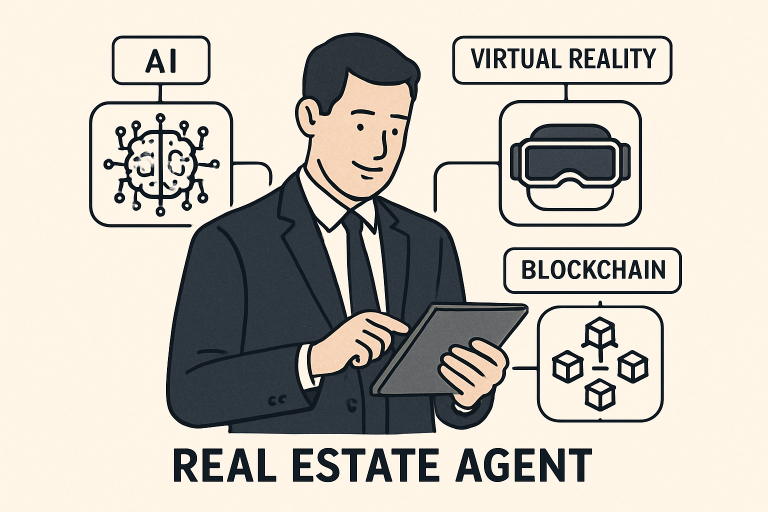
- Artificial Intelligence (AI) is automating tasks like property valuations and market analysis, allowing agents to focus on client relationships.
- Virtual and augmented reality tools are enhancing property showings by offering immersive experiences for potential buyers.
- Blockchain technology is streamlining transactions, increasing transparency, and reducing fraud in real estate dealings.
- Real estate agents are adapting to these technological advancements by upskilling and integrating new tools into their practices.
- Real estate agents can connect property brochures to virtual tours using QR code integration for faster client engagement.
Technology has caused a profound shift in the real estate industry, making information and services more accessible to buyers and sellers. Tools and platforms powered by artificial intelligence, virtual reality, and blockchain are no longer a novelty; they are rapidly becoming industry standards. Today, Washington DC real estate agents and professionals nationwide are embracing these innovations to streamline workloads and provide clients with new levels of service and transparency.
The digital transformation in real estate is more than just about convenience. Advancements enable agents to automate complex data analysis, offer clients immersive property tours, and ensure that every transaction is secure and tamper-proof. Technology is shaping not only how properties are bought and sold but also how agents differentiate themselves and build long-term client relationships in a competitive marketplace.
Adopting these cutting-edge technologies is essential for agents who want to remain relevant as tech-savvy clients demand faster, more transparent, and more innovative services. The role of the real estate agent is evolving, and technology is at the center of this transformation, enabling buyers and sellers to navigate the market with confidence and ease.
By staying updated on these changes, agents can provide added value, foster trust, and create more meaningful client interactions. The real estate landscape, shaped by tech, now demands continuous learning, creativity, and adaptability.
The Rise of Artificial Intelligence in Real Estate
Artificial Intelligence is seamlessly woven into the fabric of modern real estate. From automated property valuations to advanced predictive analytics, AI handles tasks that were previously both time-consuming and prone to human error. Agents once spent countless hours sifting through MLS data, identifying trends, and assembling reports for buyers and sellers. Now, AI software can complete these activities in seconds, providing up-to-the-minute insights on pricing, demand, neighborhood features, and more. According to Forbes, this type of automation allows agents to reallocate their efforts toward high-value activities such as negotiation, personalized marketing, and deepening client relationships.
Furthermore, AI-driven customer relationship management (CRM) systems allow agents to segment and nurture leads based on behavioral data, market signals, and engagement history. By integrating with chatbots or virtual assistants, these platforms also offer round-the-clock support to prospective clients, ensuring no opportunity slips through the cracks.
Virtual and Augmented Reality Transforming Property Showings
Gone are the days when in-person tours were the only way to explore a property. Virtual reality (VR) and augmented reality (AR) experiences let buyers “walk” through listings using their phone, tablet, or headset, regardless of where they are in the world. Detailed, 3D virtual tours are now proven to increase both interest and trust, saving clients and agents alike from the inefficiency of countless in-person showings. Augmented reality tools also allow clients to visualize potential renovations or redesigns by layering digital models over the actual space. These innovations help clients make better-informed decisions, accelerate timelines, and reduce friction in the buying process.
For sellers, this technology means broader exposure for their properties, while buyers can efficiently narrow down their choices before scheduling in-person visits. Agents who invest in these innovations position themselves as forward-thinking professionals, capable of catering to both local and international buyers. As VR and AR adoption grow, these tools are expected to become an industry standard, not just a competitive edge.
Blockchain Enhancing Transaction Transparency
Blockchain technology addresses one of the biggest frustrations in real estate: the lack of transaction transparency and security. Traditionally, property transactions involve multiple intermediaries, stacks of paperwork, and plenty of opportunities for documents to be lost or tampered with. Implementing blockchain means each party has access to a tamper-resistant, time-stamped digital ledger, with every step of the process verified and recorded. According to a CNBC report, the integration of blockchain has already reduced transaction times and fraud incidents in several markets.
Blockchain also makes title searches and verification more straightforward and less costly. Smart contracts, powered by blockchain, automate critical aspects of deals such as escrow and fund disbursement, and have the potential to significantly reduce the need for third-party verification and manual document processing. Ultimately, these advancements foster trust among buyers, sellers, agents, and institutions involved in real estate transactions.
Adapting to Technological Advancements
The pace of technological change requires agents to embrace ongoing education. The most successful professionals recognize the need to upskill in areas such as data analytics, digital marketing, and advanced transaction platforms. From learning to interpret AI-generated insights to mastering the creation of VR content or understanding the nuances of blockchain-enabled contracts, modern agents are expected to be as comfortable with tech tools as they are with contracts and negotiations.
Many agencies now encourage participation in technology seminars and offer subscriptions to leading real estate software platforms as part of their business model. Forward-thinking agents also leverage these advances to provide personalized client experiences, anticipating needs and exceeding expectations through every phase of the property journey.
Conclusion
The rapidly evolving real estate landscape, driven by AI, VR, AR, and blockchain, is redefining what it takes to be a successful agent. Those who adapt and leverage these tools not only increase efficiency but also create richer, more transparent client relationships. As technology and tradition blend, the profession becomes more client-focused, strategic, and dynamic, ultimately driving the industry forward into a more accessible and trustworthy future.