How Rolling Solutions Are Revolutionizing Industrial Workspaces
Key Takeaways
- Rolling solutions enhance operational efficiency by optimizing space and workflow.
- They contribute to improved safety standards through ergonomic design and automation.
- Integration of rolling systems leads to significant cost savings and increased productivity.
Industrial operations are in a constant state of evolution, pressured to keep pace with demands for greater efficiency and adaptability. Today, an increasing number of businesses are turning to rolling solutions and innovative mobility systems to transform their workspaces. These systems are more than just practical tools for movement; they are enabling companies to rethink how they approach space, workflow, safety, and productivity in their facilities. By leveraging advancements such as caster wheels, organizations can create environments that adapt quickly to changing operational needs, streamline processes, and reduce costly downtime.
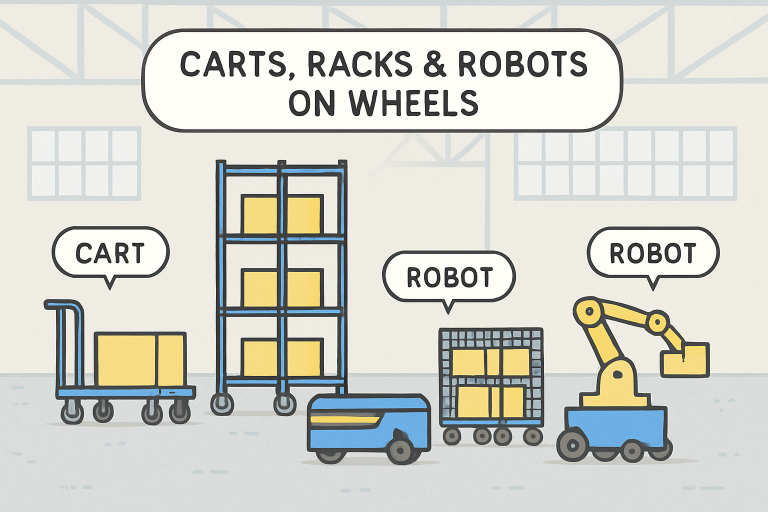
The integration of rolling solutions allows industries to maximize floor space while ensuring the swift, effortless transport of materials and equipment. As businesses face greater competition and rising costs, solutions designed for flexibility and mobility have become essential. Technologies like rolling racks, automated carousels, and smart robots are not only about moving items; they are powerful drivers of efficiency, scalability, and sustainability. For those seeking to enhance productivity while minimizing workplace risks and errors, adopting the right rolling system offers a critical competitive advantage.
Modern rolling systems go beyond manual carts and trolleys. Today’s solutions are intelligent and engineered for industrial-grade demands, helping businesses face storage and logistics challenges head-on. With tailored deployment, companies are equipped to respond to changing customer needs, new product lines, and workforce safety regulations, while maintaining a lean workspace. The shift toward increased automation and flexible infrastructure underscores the importance of mobility in future-ready work environments.
Enhancing Operational Efficiency
Implementing rolling solutions, such as automated carousel systems, helps businesses reclaim floor space, support lean manufacturing principles, and accelerate material handling. With vertical lift technologies and mobile storage racks, companies can store more inventory within the same square footage, reducing clutter and optimizing workflow.
Not only do these systems streamline access to parts and products, but they also improve workflow by reducing retrieval time and simplifying restocking. This enhanced agility enables businesses to respond more quickly to changes in demand and production requirements. According to experts from the Brookings Institution, flexible automation systems are vital for industries facing labor shortages and escalating cost pressures.
Improving Safety Standards
Workplace safety is a top priority in industrial environments. Rolling solutions address safety concerns by reducing the need for manual lifting and repetitive strain on workers. Automated carts and storage carousels handle heavier loads and decrease the likelihood of injuries, a significant step forward in injury prevention.
Furthermore, integrating smart monitoring systems and IoT sensors enables real-time oversight of both equipment and environmental conditions. Companies can track usage patterns, identify wear and tear before it becomes hazardous, and quickly implement corrective actions. As demonstrated in an OSHA analysis, automating material handling directly reduces accident and injury rates, contributing to healthier, more productive industrial workspaces.
Cost Savings and Productivity Gains
Switching to rolling solutions translates into measurable cost reductions and workflow improvements. Automated storage systems, for instance, can liberate physical space that was previously underutilized. A case study in one auto dealership revealed that replacing static tire racks with a motorized carousel freed up a service bay valued at $250,000 in annual revenue, all from a $40,000 equipment investment. This swift return on investment (ROI) is appealing to companies watching their bottom line closely.
Beyond real estate savings, efficiency gains stem from faster material access, fewer errors in picking and storage, and reduced labor required for manual transport. By removing bottlenecks and streamlining repetitive workflows, employees can focus on higher-value tasks, increasing the overall output of the operation.
Real-World Applications
Diversified industries benefit from deploying rolling solutions, with logistics hubs, e-commerce warehouses, and manufacturing plants leading the charge. Autonomous mobile robots (AMRs) use dynamic zoning to adjust workflow allocations in real time, preventing overload and maintaining productivity even as order volumes fluctuate. Robotics-driven zones result in more balanced workloads, higher output, and fewer breakdowns. These attributes are integral in supply chains where flexibility and uptime are critical for success.
Similarly, hospitals and laboratories leverage rolling storage units to safely and promptly deliver sensitive materials. In retail, modular shelving helps maintain inventory organization through seasonal demand shifts. The adaptability of these rolling units enables industries to design their layouts to address both current needs and evolving operational challenges. According to Forbes, the rise of AMRs and similar innovations has accelerated digital transformation in industrial sectors worldwide.
Future Trends in Rolling Solutions
The next generation of rolling solutions is defined by its synergy with artificial intelligence (AI) and machine learning. Intelligent storage and transport systems will soon be able to auto-configure in response to worker movements, environmental changes, and forecasted task loads. AI environments can actively enhance productivity by personalizing workspace lighting, temperature, and even equipment arrangement in real time, adapting the environment for both comfort and performance.
Further advancements in connectivity and automation will pave the way for entirely autonomous facilities, where rolling solutions operate alongside human teams harmoniously. As industries demand greater flexibility, investments in adaptive, AI-integrated solutions are expected to surge, supporting organizations in rapid scaling and resilience, especially in uncertain or rapidly changing markets.
Final Thoughts
Rolling solutions represent a seismic shift in how industrial workspaces are designed, maintained, and improved. Their role in enhancing efficiency, promoting safety, and delivering cost savings is unmistakable. As these systems become more widespread, they will remain essential assets for businesses striving to remain competitive and agile. For companies seeking to future-proof their operations, embracing rolling solutions is more than a technological upgrade; it is a commitment to resilient, innovative, and sustainable industrial practices.