Choosing Long-Lasting Roofing Materials for Every Climate
Key Takeaways
- Understanding your local climate is essential for selecting the most suitable roofing material.
- Materials like metal, slate, and clay tiles offer exceptional durability across various climates.
- Energy efficiency and maintenance requirements vary among roofing materials.
When it comes to roofing, the material you choose will significantly impact your home’s ability to withstand harsh weather and provide years of protection. In regions with unpredictable weather, a roof needs to offer resilience and curb appeal. Understanding the options available for your specific climate is essential for an investment that brings true peace of mind. Whether you are preparing for hurricane season, heavy snowfall, or searing summer temperatures, selecting the appropriate roofing material is critical. Consulting experts like Assist Roofing can help you navigate these choices and ensure the installation meets the highest standards.
Not all roofing materials are created equal, and the best choice for one climate may not offer the same performance in another. Savvy homeowners analyze their local environment before making a choice, as this decision affects not just repairs but also daily comfort and long-term energy costs. This guide explores the leading durable options for diverse climates and the factors to consider before making a decision.
Understanding Climate Impact on Roofing Materials
Roofs must endure a wide range of environmental stressors throughout their lifespan. Regional factors, including temperature swings, intense sunlight, humidity, wind, ice, and even salt spray, all play important roles in determining how long a roof will last. Exposure to such elements can accelerate wear and undermine a roof’s integrity if the material is not suited to the conditions. For example, asphalt shingles might struggle in blazing hot regions, while wooden shakes can warp in humid climates or rot in areas with frequent rain. According to the Consumer Reports Roofing Buying Guide, matching your roofing choice to the environment is one of the best ways to ensure both long-term savings and property protection.
Top Durable Roofing Materials for Various Climates
1. Metal Roofing
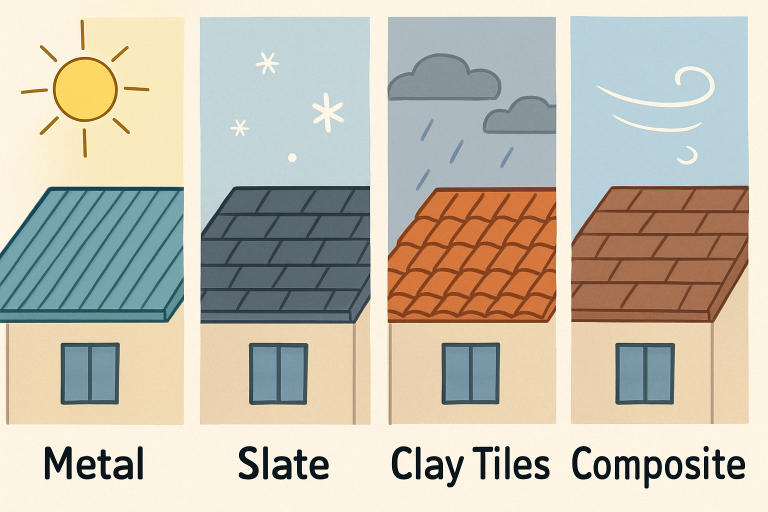
Metal roofing stands out for its extreme durability, with lifespans of up to a century if properly maintained. This roofing category is highly favored in areas prone to hurricanes or severe storms. Metal panels resist severe winds, hail, and torrential rain while reflecting solar heat, helping moderate indoor temperatures and reduce cooling costs in warmer zones. Since it is relatively lightweight, metal requires little structural reinforcement. Plus, innovations allow for a wide variety of finishes and colors, making it a flexible solution for modern and traditional homes alike. You can learn more about the advantages of metal roofs on the U.S. Department of Energy’s Cool Roofs page.
2. Slate Roofing
Slate is considered one of the most enduring roofing materials available to homeowners, lasting well over a century under optimal conditions. Benatural stone, slate is highly fire-resistant and unfazed by humidity or insect damage. Its thickness provides excellent insulation against temperature extremes, and its ability to shed snow and rain makes it ideal for regions with heavy precipitation. However, slate’s weight means the building structure must be strong enough to support it. The upfront investment is high, but replacement and repairs are rare, making it cost-effective in the long run.
3. Clay and Concrete Tiles
Popular throughout the southwestern United States and Mediterranean climates, clay and concrete tiles are known for their ability to withstand high temperatures. These tiles can last up to 100 years when properly cared for and offer impressive resistance to sun damage and fire. Their thermal mass helps moderate indoor temperatures by absorbing less heat during the day and releasing it at night. While these tiles perform well in hot, dry climates, their heavyweight means a reinforced roofing structure may be necessary, which can increase installation costs. Their aesthetic value and wide range of colors are added bonuses in residential architecture.
4. Composite and Synthetic Materials
Recent years have seen a surge in high-performance roofing materials that replicate the look of wood, slate, or shake shingles while offering enhanced resilience and longevity. Synthetic options are engineered to resist mold, impact, and UV rays. Many come with substantial warranties and can be recycled at the end of their useful life, making them a good choice for homeowners seeking eco-friendly alternatives. They are generally lighter than natural stone or clay, and modern versions often feature advanced coatings that further extend their service life.
Factors to Consider When Choosing Roofing Materials
- Climate Compatibility: The material’s resistance to your region’s key weather challenges is crucial for long-term stability.
- Energy Efficiency: Choose materials that insulate well or reflect sunlight to help reduce heating or cooling costs, depending on your climate needs.
- Maintenance Requirements: Consider the frequency and type of maintenance the roof will require, which can vary dramatically depending on the material.
- Budget: Look for a balance between initial investment, potential savings on energy bills, and life expectancy.
Conclusion
Selecting the right roofing material for your specific climate does far more than provide shelter. It directly impacts energy efficiency, long-term costs, and the overall lifespan of your home. Climate-appropriate materials help regulate indoor temperatures, reduce strain on heating and cooling systems, and withstand weather-related stress such as heavy rain, snow, heat, or wind. Options such as metal, slate, and clay tiles are favored for their durability, resistance to damage, and minimal maintenance requirements. However, brilliant selection also involves evaluating insulation performance, structural compatibility, and upkeep requirements. By aligning roofing choices with environmental conditions and your home’s design, homeowners can protect their investment, improve comfort, and enjoy reliable performance for decades while ensuring long-term sustainability, resilience, and peace of mind today.