How Digital Dentistry Is Improving Patient Outcomes
Key Takeaways
- Digital tools like intraoral scanners and 3D printing are transforming dental procedures.
- Artificial intelligence (AI) improves diagnostic accuracy and enables personalized care.
- Teledentistry increases access to care, especially for underserved populations.
- Streamlined digital workflows reduce treatment times and enhance patient comfort.
Table of Contents
- Enhanced Diagnostic Capabilities
- Personalized Treatment Planning
- Improved Patient Experience
- Teledentistry and Access to Care
- Integration of Digital Workflows
- Future Trends in Digital Dentistry
Digital dentistry is transforming oral healthcare by introducing technology-driven solutions that enhance precision, efficiency, and patient satisfaction. The adoption of digital tools and techniques allows dental professionals to provide better diagnostics, more personalized treatment, and elevate the standard of patient care. As a pioneer in advanced clinical education, the Pikos Institute demonstrates how embracing innovation can lead to improved patient outcomes and practice growth. These advancements benefit not only practitioners but, more importantly, patients who experience streamlined procedures and more predictable results.
Technological advancements in dental care, such as intraoral scanners, 3D imaging, artificial intelligence, and teledentistry, have transformed treatment delivery by enabling early problem detection, reducing errors, and improving patient comfort. Digital dentistry meets the rising demand for accessible and effective solutions, making care quicker and smarter. By integrating technology across all stages of dental practices, clinics benefit from improved patient engagement and the ability to provide precise, minimally invasive treatments, ultimately leading to better oral health outcomes and increased patient satisfaction.
Enhanced Diagnostic Capabilities
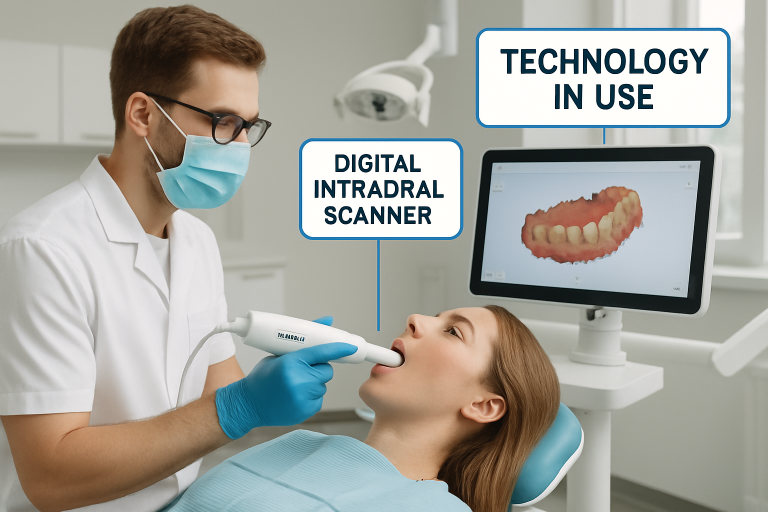
Digital imaging technologies, including intraoral scanners, digital radiographs, and cone-beam computed tomography (CBCT), have transformed dental diagnostics. These technologies provide detailed images for early detection of oral health issues such as caries and periodontal problems. Intraoral cameras, in particular, enhance communication and patient engagement by allowing real-time visualization of oral conditions, thereby fostering trust between patients and clinicians.
Personalized Treatment Planning
The rapid integration of artificial intelligence (AI) and machine learning in dentistry enhances the analysis of digital X-rays, 3D scans, and patient histories, leading to the identification of subtle data patterns. These technologies minimize human error and expedite clinical decision-making, allowing for the development of personalized treatment plans based on individual patient profiles. AI applications are increasingly utilized in orthodontics, implant placement, and preventive care. Patients experience improved diagnostics and tailored recommendations through AI-driven simulations, which facilitate optimal treatment planning and a better understanding of expected outcomes, resulting in fewer complications and better long-term outcomes for clinics adopting these innovations.
Improved Patient Experience
Digital technologies are profoundly reshaping the patient experience at every stage of care. 3D models, interactive displays, and digital simulations empower patients to visualize their dental concerns and understand recommended treatments more thoroughly than ever before. This transparency leads to higher patient satisfaction, as individuals feel more informed, aligned with their clinical team, and confident about the care being delivered.
From same-day restorations to less-invasive procedures, digital workflows minimize discomfort and reduce the number of required visits. Digital scheduling, reminders, and seamless communication provide a smoother, more patient-centric process overall. As a result, clinics see higher treatment acceptance rates, improved retention, and positive word-of-mouth referrals, strengthening their reputation and patient relationships.
Teledentistry and Access to Care
Teledentistry is a major breakthrough for expanding the reach of dental care, especially in rural or underserved communities. With secure digital platforms, dental teams can perform consultations, diagnostics, and follow-ups without requiring patients to travel long distances. Teledentistry bridges the gap for those with mobility issues or who live in remote areas, improving continuity of care and making oral health services more inclusive.
Real-time sharing of digital images, records, and patient histories allows for collaborative care and faster diagnoses. The convenience and efficiency of teledentistry not only enhance accessibility but also improve patient engagement and satisfaction by making dental care more in line with modern lifestyles. According to Digital Journal, teledentistry is positioned to become a cornerstone of preventive dental care in the years to come.
Integration of Digital Workflows
The adoption of digital workflows ties together every aspect of dental care, from imaging to diagnosis to treatment delivery. Electronic health records, digital scheduling systems, and interconnected imaging solutions eliminate errors associated with paper-based processes and manual data entry. By automating and integrating these steps, dental practices achieve faster turnaround times for lab work, more accurate diagnoses, and more transparent patient care.
This connected approach also reduces administrative burdens and improves collaboration between dental teams, dental labs, and specialists. For patients, this means fewer office visits, less waiting time, and easier access to personal health data. Digital workflow integration results in better overall clinical outcomes, greater convenience, and stronger relationships between patients and their care providers.
Future Trends in Digital Dentistry
The future of digital dentistry is promising, with innovations such as 3D bioprinting being explored for the regeneration of damaged gum tissues and bone, which could transform periodontal therapy and oral rehabilitation. Additionally, technologies like augmented reality, virtual planning, and chairside milling are expected to improve surgical precision and enhance patient satisfaction. As practitioners adopt data-driven care, digital dentistry is set to elevate standards of quality, efficiency, and patient-focused outcomes. This transformation marks a significant shift in dental practice, integrating technology with clinical expertise to optimize patient outcomes. Overall, digital dentistry aims to raise care standards, improve accessibility, and enhance patient satisfaction, equipping dental professionals to improve outcomes and respond to patients’ changing needs.