Integrating Private Real Estate Investments into Modern Portfolios
Key Takeaways
- Private real estate offers diversification and the potential for higher risk-adjusted returns compared to traditional stocks and bonds.
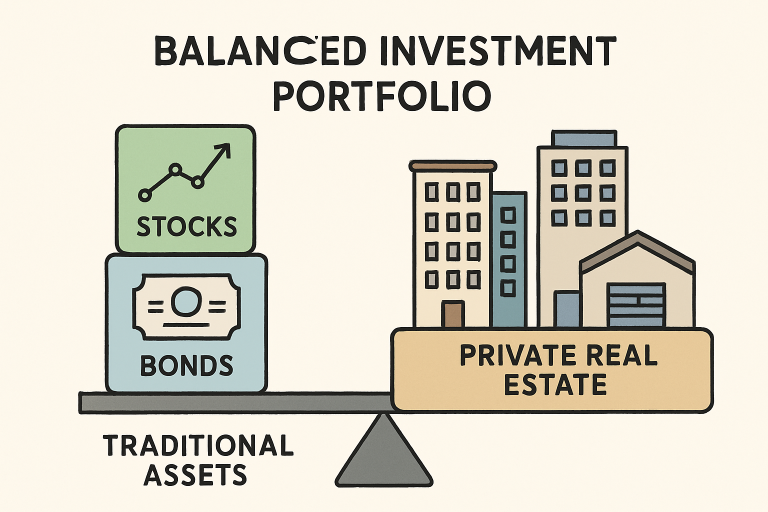
- Strategic blending of private real estate and public REITs can create a more balanced portfolio.
- Investors must evaluate liquidity, regulatory, and property market trends for successful allocation.
Table of Contents
- Understanding Private Real Estate Investments
- Benefits of Private Real Estate in Portfolios
- Strategies for Integration
- Liquidity Considerations
- Market Trends and Opportunities
- Conclusion
Integrating private real estate into investment portfolios has become an increasingly popular diversification strategy. Unlike publicly traded real estate investment trusts (REITs), private real estate offers investors the potential for long-term value appreciation and income generation through direct property ownership or private real estate funds. These assets can help balance portfolios by providing exposure to tangible properties that often behave differently from stocks and bonds, potentially reducing overall volatility. Investors should carefully assess factors such as liquidity, management expertise, and market conditions before committing capital to private real estate.
Firms like Paragon Capital Management help investors navigate these opportunities by providing access to professionally managed private real estate investments. By incorporating private real estate alongside traditional equities and fixed-income assets, investors can create more resilient portfolios that capture both growth and income potential. Thoughtful integration of these assets may enhance portfolio stability and contribute to long-term financial objectives.
Understanding Private Real Estate Investments
Private real estate investments are assets acquired and managed outside of public exchanges. These investments typically involve direct ownership or partnership in properties such as multifamily buildings, retail centers, or industrial facilities. Investors can enter the private real estate space through various means, including private equity funds, syndications, or joint ventures. The distinguishing factor is that these properties are shielded from daily market swings and are often managed with a focus on long-term cash flow and appreciation.
Access to these investments has broadened considerably, giving more investors the opportunity to capture the potential upside that was previously accessible only to large institutions. Private vehicles may have higher entry thresholds and involve more rigorous due diligence, but they can play a pivotal role in building diversified, resilient portfolios.
Benefits of Private Real Estate in Portfolios
- Diversification: Private real estate’s correlation with stocks and bonds is comparatively low, cushioning portfolios during periods of equity or bond market volatility. This makes it a valuable asset for spreading risk across economic cycles.
- Potential for Higher Returns: Private markets can deliver enhanced yields and returns on invested capital, especially in niche or high-demand sectors where competition is less intense and pricing dislocations occur.
- Inflation Hedge: Real estate often keeps pace with, or even outpaces, inflation, since rents and property values tend to rise during periods of elevated consumer prices. This ability to preserve purchasing power is a primary draw for investors.
Strategies for Integration
- Blended Investment Approach:Combining private real estate with publicly traded REITs allows investors to capture stable, long-term returns while maintaining some liquidity. Prominent funds and institutional investors have increasingly adopted this blended approach, allocating evenly across private and public real estate segments. This provides a reliable mix of immediate income, gradual appreciation, and flexibility to reposition assets as market conditions shift.
- Focus on Niche Markets:Opportunistic sectors such as data centers, life sciences facilities, and senior living communities have become increasingly attractive. These specialized property types carry the potential for sustained growth driven by demographic shifts and technological advancements. Data centers, in particular, are seeing heightened demand due to the rapid expansion of cloud computing and artificial intelligence.
- Utilize Non-Traded REITs and Private Funds: Private funds and non-listed REITs often feature lower minimum investments and offer access to professional management and tax advantages. For individuals seeking exposure without the need for hands-on property management, these vehicles serve as accessible entry points to the benefits of private real estate.
Liquidity Considerations
Liquidity is a distinguishing factor separating private real estate investments from their public market peers. While private investments generally involve longer lock-up periods and limited ability to convert holdings to cash quickly, thoughtful allocation can help strike a balance between income, growth, and withdrawal requirements. Investors should realistically assess their time horizon and liquidity needs before committing significant capital, keeping in mind that a mix of public and private assets can mitigate liquidity constraints without sacrificing diversification or return potential.
Market Trends and Opportunities
Institutional and individual interest in private real estate is at historic highs. According to a recent survey by Blackstone, over 80 percent of financial advisers are not only recommending private real estate investments but also advocating target allocations of 10 to 20 percent of portfolios. At the same time, the asset class continues to expand into innovative areas like build-to-rent residential communities and alternative commercial spaces, reflecting a broader shift in investor demand for specialized, resilient real estate solutions.
This expanding universe is creating unprecedented opportunities, especially for those able to anticipate demographic and economic changes. Keeping informed on trends, from the surge in data centers to the shifting dynamics of senior living, can help investors identify outperforming sectors ahead of the curve.
Conclusion
Integrating private real estate into a modern portfolio provides a powerful combination of diversification, attractive risk-adjusted returns, and protection against inflation. Strategic, research-driven approaches, such as blending private and public real estate, exploring niche markets, and leveraging innovative fund structures, can position investors to capture evolving real estate opportunities. By considering liquidity and keeping pace with industry trends, investors can confidently pursue their long-term financial goals while navigating an ever-changing investment landscape.