Essential Legal Steps to Take Immediately After a Car Accident
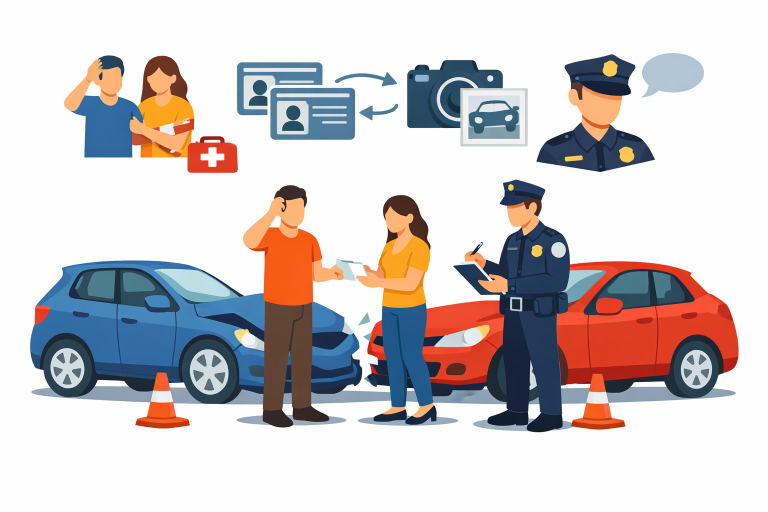
Key Takeaways
- Ensure safety and check for injuries immediately after an accident.
- Report the accident to law enforcement and obtain a police report.
- Exchange information with all parties involved.
- Document the scene thoroughly with photos and notes.
- Notify your insurance company promptly.
- Be aware of state-specific reporting requirements.
- Consult with a legal professional to understand your rights.
Table of Contents
- Ensure Safety and Check for Injuries
- Report the Accident to Law Enforcement
- Exchange Information with Other Parties
- Document the Accident Scene
- Notify Your Insurance Company
- Understand State-Specific Reporting Requirements
- Consult with a Legal Professional
Experiencing a car accident is a stressful event that can leave you disoriented and unsure of what to do next. Taking the right legal steps immediately after the incident is important to protect your rights, handle insurance claims, and ensure compliance with all state laws. If you are injured or dealing with property damage, having a clear action plan can significantly improve the outcome. If you are in Alabama, you should consider consulting an uninsured motorist claim Alabama lawyer for advice on how to proceed with your claim.
Quick action can strengthen your case, preserve evidence, and help ensure you are compensated fairly for any injuries or damages. Although each accident is unique, following these basic legal steps can provide a steady foundation while you navigate the aftermath and safeguard your interests.
Your safety and well-being come first, but it’s also vital to understand how immediate legal steps, such as calling for help and gathering information, shape the process that follows. Whether you are in a minor fender-bender or a major crash, documenting everything properly can influence insurance negotiations and legal proceedings.
Once safety is secured, following a logical, step-by-step procedure helps prevent mistakes, protects your rights, and may speed up recovery for you and those involved in the accident.
Ensure Safety and Check for Injuries
The priority after any accident is your safety and the safety of others. Move your vehicle to a safe location, such as the shoulder of the road, if possible, to minimize the risk of further collisions. Check for injuries in your vehicle and others nearby. Even if injuries seem minor or if you feel fine, do not underestimate the effects of shock or adrenaline, which can mask more serious problems. If anyone is injured, call 911 for emergency assistance immediately. For further information on medical considerations after car accidents, refer to this WebMD resource.
Report the Accident to Law Enforcement
Contacting local police or the highway patrol after an accident is required in many states, regardless of the accident’s severity. Law enforcement will create an official report detailing the incident, which is valuable when dealing with insurance companies or potential legal challenges. A police report is an objective record and may be required later for claim verification. Not reporting the accident can lead to penalties such as fines or license suspension in some states. For specific requirements, visit your state DMV website or review this National Highway Traffic Safety Administration crash reporting guide.
Exchange Information with Other Parties
After making sure everyone is safe, exchange the following information with the other driver(s):
- Full names and contact details
- Driver’s license numbers
- Vehicle registration information
- Auto insurance company name and policy number
In addition, gather contact information from any witnesses who may have observed the accident. Their statements can be invaluable if there are disputes about what happened.
Document the Accident Scene
Take detailed photographs of the scene from multiple angles before moving the vehicles, if it’s safe to do so. Capture images of all vehicles involved, visible injuries, debris, skid marks, road signs, and traffic signals. Note the time and date, as well as weather and light conditions. If you are able, create a quick diagram showing the positions of vehicles, obstacles, and other relevant factors. Proper documentation helps prevent disputes over the facts and strengthens the claim process.
Notify Your Insurance Company
Report the accident to your insurance company as soon as possible, sharing all relevant documentation and information collected at the scene. Prompt notification allows the insurer to start the claims process quickly. Most policies require immediate reporting, and delays may risk your eligibility for coverage. Review your policy for specific reporting timelines and obligations, as missing deadlines can jeopardize your benefits.
Understand State-Specific Reporting Requirements
Each state has distinct rules for when and how a car accident must be reported. Some require drivers to report all accidents with injury or property damage above a certain dollar amount, while others may require reports for every crash, regardless of severity. Failing to comply with these laws can result in fines or loss of driving privileges. Research your state’s requirements or consult the DMV for current regulations. For example, in Texas, law enforcement officers are required to submit a crash report within 10 days if the accident resulted in injury, death, or property damage of $1,000 or more. More details can be found in the Texas Administrative Code.
Consult with a Legal Professional
Even for what seem like minor accidents, a legal consultation can be a wise move. Lawyers experienced in motor vehicle accidents can clarify your rights and obligations, assist with gathering evidence, handle communications with insurance companies, and help you seek appropriate compensation if injured. They can also represent you if there are disputes about liability or personal injury claims, or if the other driver is uninsured or underinsured. If you are in Alabama, you might consider consulting an uninsured motorist claim Alabama lawyer for advice on how to proceed with your claim.
Taking these steps is crucial to protecting your rights and interests after a car accident. From ensuring immediate safety to consulting a knowledgeable attorney, each stage can influence how smoothly the process goes for you. Staying calm and organized immediately after an accident will help you achieve the best possible outcome during a stressful time.
