How to Use a Pool Swim Jet for Ultimate Resistance Swimming

Finding a workout that delivers serious cardiovascular results without demanding a massive space commitment is one of the biggest challenges facing home fitness enthusiasts. Traditional lap pools require extensive backyards and significant construction, while gym memberships mean commuting, crowds, and rigid schedules. What if your existing pool—regardless of its size—could become a powerful resistance training machine?
Enter the pool swim jet: a counter-current system that transforms any standard home pool into a dynamic swimming facility. By generating a continuous, adjustable current, a swim jet lets you swim endlessly in place, achieving the same workout intensity as swimming laps in an Olympic-sized pool. Whether you’re a competitive swimmer maintaining form, a triathlete building endurance, or someone seeking a joint-friendly full-body workout, this technology eliminates every barrier between you and elite-level resistance swimming. In this guide, you’ll discover exactly how to set up, use, and master your swim jet for ultimate fitness results right at home.
What is a Swim Jet and Why It’s a Game-Changer for Home Pools
A swim jet, also known as a counter-current system, is a powerful device installed in your pool that generates a continuous stream of water against which you swim. Think of it as a treadmill for swimmers—you remain stationary while the current provides endless resistance, allowing you to swim indefinitely without ever reaching a wall. Unlike traditional lap swimming where you push off, glide, turn, and repeat, a swim jet delivers uninterrupted cardiovascular effort that keeps your heart rate elevated and your muscles constantly engaged.
The core concept is elegantly simple: water flows toward you at a controlled speed, and you swim against it. What separates a high-quality swim jet from basic pool jets is the sophistication of the current it produces. A well-engineered system creates a wide, smooth, laminar flow that mimics the feel of swimming through open water rather than fighting a narrow, turbulent blast. You can adjust the intensity from a gentle current suitable for rehabilitation exercises all the way up to a powerful flow that challenges even competitive swimmers.
Two technological features elevate modern swim jets into serious fitness equipment. First, an IP68-rated motor ensures complete waterproof protection at the highest industrial standard, meaning the system operates safely and reliably for years despite constant submersion and exposure to pool chemicals. This rating eliminates concerns about electrical safety and premature component failure. Second, full-inverter technology provides stepless speed control and remarkable energy efficiency. Rather than operating at fixed speeds with abrupt transitions, an inverter-driven system lets you dial in exactly the resistance level you need with precision, while consuming significantly less electricity than conventional motors. This combination of durability, safety, and intelligent control makes a swim jet one of the most impactful upgrades you can add to any home pool—transforming an underused recreational space into a dedicated fitness facility that rivals professional training centers.
Setting Up Your Pool for Perfect Resistance Swimming
Before you dive into your first resistance swimming session, proper setup ensures you’ll get the smoothest, most effective current possible. Start by evaluating your pool’s dimensions and layout. While swim jets work in pools of virtually any size, you’ll want at least eight to ten feet of unobstructed swimming length in front of the jet nozzle. Rectangular pools offer the most natural lane feel, but freeform shapes work perfectly well as long as you identify a straight section where the current can flow without deflecting off nearby walls. Electrical access is another critical consideration—your system requires a dedicated circuit with appropriate amperage, and the connection point should be positioned where it won’t interfere with pool traffic or landscaping.
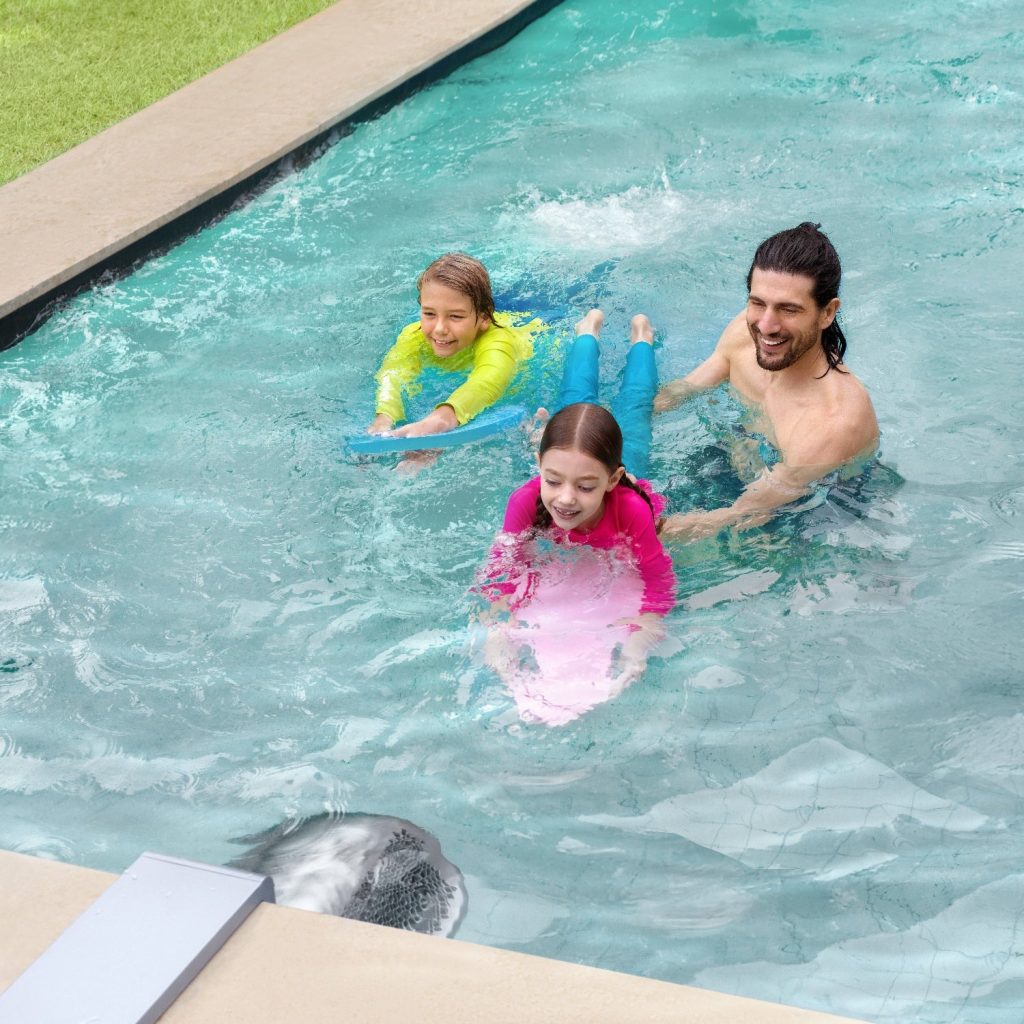
Professional installation is strongly recommended for most homeowners. A certified technician will ensure the jet housing is properly sealed against the pool wall, electrical connections meet local codes, and the plumbing integrates seamlessly with your existing filtration system. While some experienced DIY enthusiasts can handle the mechanical aspects, the electrical work typically requires a licensed electrician familiar with pool equipment regulations.
Once installed, your focus shifts to optimizing the swimming experience. Position yourself roughly four to five feet from the jet outlet—this is the sweet spot where the current is fully developed but hasn’t yet dispersed too widely. If you’re too close, the flow feels concentrated and turbulent; too far back, and you lose resistance intensity. Many swimmers install a tether anchor point on the pool floor as a reference marker for consistent positioning. Begin calibrating your resistance by starting at the lowest setting and gradually increasing until you find a speed that allows you to maintain proper stroke form for at least two continuous minutes. This becomes your baseline training intensity. For safety during your first sessions, always keep the emergency stop button within arm’s reach, familiarize yourself with how quickly the current dissipates when powered down, and never operate the system during electrical storms or when pool chemistry is being actively adjusted.
Crafting Your Swim Jet Fitness Routine: From Beginner to Advanced
The real magic of a swim jet lies not just in having it installed, but in how you structure your training around it. A thoughtful progression from foundational technique through advanced endurance work ensures you build fitness safely while continuously challenging your body. Here’s how to approach each stage of your resistance swimming journey.
Getting Started: Foundational Strokes and Technique
Your first priority in the current is establishing proper body alignment. The swim jet’s flow will immediately reveal any postural weaknesses—if your hips drop or your head lifts too high, you’ll feel dramatically more drag than in still water. Begin with the resistance set to its lowest level, focusing on maintaining a streamlined position with your head neutral, hips near the surface, and core engaged. Freestyle is the ideal starting stroke because it offers the most natural body position against a current. Concentrate on a high elbow catch, smooth rotation from the hips, and a relaxed but rhythmic kick. Once you can hold form comfortably for three to five minutes continuously, introduce backstroke, which challenges your core stability differently while giving your shoulders active recovery. During these early sessions, swim for short intervals of two to three minutes with equal rest periods, gradually extending your continuous swimming time over the first two weeks until you can maintain ten unbroken minutes at low resistance.
Intermediate: Structured Interval Workouts
Once your foundational form is solid, interval training unlocks the swim jet’s full cardiovascular potential. High-Intensity Interval Training adapts beautifully to resistance swimming because you can manipulate current speed instantly rather than relying on your own pace discipline. A proven starting structure involves one minute at a challenging resistance followed by thirty seconds at a very low setting for active recovery, repeated eight to ten times. As your fitness improves, experiment with longer work intervals or shorter rest periods. This is also the stage to incorporate breaststroke and butterfly into your rotation. Breaststroke against the current develops exceptional leg and hip power, while butterfly—even in short twenty-second bursts—builds explosive shoulder strength and core coordination that transfers to every other stroke. Increase your baseline resistance by one increment every week or two, always ensuring you can maintain technically sound strokes throughout each work interval rather than simply surviving with deteriorating form.
Advanced: Specialized Drills and Endurance Building
Advanced swimmers can leverage the swim jet for highly targeted technique refinement that’s nearly impossible in traditional pool training. Single-arm freestyle drills become incredibly revealing against a current—any asymmetry in your catch or pull immediately causes you to drift sideways. Catch-up drill, where one hand waits extended while the other completes a full stroke cycle, forces you to maximize propulsion from each individual pull rather than relying on momentum. For open water race preparation, use the inverter’s variable control to simulate changing conditions: alternate between moderate steady flow and sudden surges that mimic currents, waves, or pack swimming turbulence. For peak cardiovascular development, build toward long steady-state sessions of thirty to forty-five minutes at a moderate resistance that keeps your heart rate in the aerobic zone. These extended efforts develop the mitochondrial density and capillary networks that define elite endurance, and the swim jet’s consistent current ensures every single minute of your session counts toward that adaptation.
Maximizing the Advantages of Your Home Pool Upgrade
Once you’ve established a consistent swim jet routine, you’ll quickly realize that the benefits extend far beyond simply getting a good workout. The most immediate advantage is weather independence—rain, wind, extreme heat, or early darkness no longer dictate your training schedule. Your pool becomes a controlled environment where you can train at five in the morning or ten at night, in any season, without adjusting for external conditions. For triathletes and competitive swimmers following periodized training plans, this reliability is transformative. You never miss a scheduled swim session because the local pool was closed for maintenance or overcrowded during peak hours.
Time efficiency represents perhaps the most underappreciated benefit of home resistance swimming. Consider the typical gym pool experience: packing a bag, driving fifteen to thirty minutes, changing, waiting for a lane, swimming, showering, dressing, and driving home. That forty-five-minute swim easily consumes two hours of your day. With a swim jet, you walk outside, enter the water, and begin training within minutes. This reclaimed time compounds dramatically over weeks and months, making consistent training far more sustainable for busy professionals and parents.
The physical benefits of swimming against a constant current deserve special attention. Because water provides resistance in every direction simultaneously, your body recruits stabilizer muscles that remain dormant during land-based exercise. Your shoulders, core, hips, and ankles all work continuously to maintain alignment against the flow, delivering a genuinely full-body stimulus that running or cycling cannot replicate. Crucially, this happens without impact—your joints experience zero compression forces, making resistance swimming ideal for athletes recovering from injuries, older adults managing arthritis, or anyone who needs high-intensity cardio without skeletal stress. The adjustable nature of the inverter-controlled current also provides something rare in fitness: perfectly measurable progression. You can track exactly which resistance level you used last week, increase it by a precise increment this week, and document your improvement over months with objective data rather than subjective effort perception. Combined with the privacy and comfort of training in your own space—no shared lanes, no judgment, no schedule constraints—a swim jet transforms pool ownership from a luxury amenity into a legitimate performance training asset. For homeowners already investing in smart home ecosystems from brands like iGarden to manage their outdoor spaces, adding an intelligent swim jet fits naturally into a connected, technology-driven lifestyle.
Essential Tips for Effective and Safe Swim Jet Usage
Getting the most from your resistance swimming sessions requires attention to preparation, recovery, and safety practices that differ somewhat from traditional pool swimming. A proper warm-up against the current should last five to seven minutes at the lowest resistance setting, focusing on easy freestyle with exaggerated body rotation and gentle kicking to elevate your heart rate gradually and lubricate your shoulder joints. Follow this with thirty seconds each of arm circles, ankle rotations in the water, and vertical kicking while holding the pool edge. For your cool-down, reduce the jet to its minimum flow and swim slowly for three to four minutes, then spend two minutes stretching your lats, shoulders, and hip flexors while standing in the shallow end. This structured transition prevents the muscle stiffness that often follows intense aquatic training.
Hydration deserves deliberate attention because immersion in water masks your body’s thirst signals. You sweat significantly during vigorous swimming, yet the surrounding water prevents you from noticing moisture loss. Keep a water bottle on the pool deck and take three to four sips every ten minutes during extended sessions. For workouts exceeding thirty minutes, consider an electrolyte drink to replace sodium and potassium lost through sweat.
Equipment maintenance directly affects both performance and longevity. Rinse the jet intake area weekly to prevent debris accumulation that can reduce flow quality. Monitor your pool chemistry more carefully than you might for recreational use—balanced pH and proper sanitizer levels protect both the motor housing seals and the internal components from corrosive damage. Inspect the jet nozzle monthly for calcium buildup that can disrupt the laminar flow pattern you depend on for smooth swimming conditions.
Safety protocols must be non-negotiable in your household. Never swim against the current alone—even experienced swimmers can experience sudden cramps or fatigue that become dangerous when a current prevents easy movement to the wall. Ensure every family member knows the location and operation of the emergency stop function, and test it monthly. Children should never access the swim jet controls unsupervised, and the system should remain off whenever young or inexperienced swimmers are in the pool. Finally, establish a clear rule: if you feel lightheaded, experience chest tightness, or notice your stroke deteriorating significantly, power down immediately rather than pushing through. The current will always be there tomorrow.
Transform Your Home Pool Into a Personal Training Powerhouse
A pool swim jet represents the ultimate convergence of convenience, technology, and serious athletic training. By installing a counter-current system in your existing home pool, you eliminate every traditional barrier to consistent swim training—space limitations, facility schedules, weather disruptions, and wasted commute time. What remains is pure, focused fitness potential available whenever you’re ready to use it.
The combination of IP68-rated motor protection and full-inverter technology ensures that your investment delivers reliable, precisely controlled resistance for years of demanding use. From gentle rehabilitation currents to race-pace challenges that push elite swimmers to their limits, this single piece of equipment scales with your ambitions. Pair that technological precision with a structured training approach—progressing from foundational technique through interval work and into advanced endurance building—and you have a complete fitness system that rivals any professional aquatic training center.
Your home pool doesn’t have to be just a place to cool off on hot days. With a swim jet, it becomes the centerpiece of your fitness life—a private, powerful, endlessly adaptable training environment. Take the next step, explore the upgrade that transforms recreational water into your personal performance laboratory, and discover what resistance swimming can do for your body and your goals.