5 Misconceptions Patients Have About Dental Implant Surgery
You might be thinking about dental implants because you are tired of hiding your smile, avoiding certain foods, or worrying that a denture might slip at the worst possible moment. At the same time, you may be scrolling through search results, hearing stories from friends, and feeling your anxiety climb with every new piece of information. As you look for answers, you might wonder whether a Great Falls, MT dentist can help you feel more confident about your options. It can feel like there is a “before” where you at least know what to expect from your current teeth, and an uncertain “after” where surgery, pain, and cost all feel blurry and frightening.end
If that sounds familiar, you are not alone. Many people who would benefit from implants hesitate for months or even years because of misunderstandings. This guide walks through 5 common misconceptions about dental implant surgery and gently separates fear from fact. In short, implants are usually a planned, staged procedure, the pain is often less than people expect, serious complications are uncommon, and the long term benefits can be significant when you are a good candidate and you work with an experienced dentist or surgeon.
So where does that leave you if you are still unsure and a bit scared to take the next step?
Misconception 1: “Dental implant surgery is unbearably painful”
The word “surgery” alone can trigger images of intense pain and long recovery. You might imagine lying awake while someone drills into your jaw, or needing heavy pain medication for weeks. Because of this fear, many people postpone treatment even when daily chewing and smiling already hurt.
Here is the part that surprises most patients. For routine cases, dental implant surgery is usually done under local anesthesia, sometimes with light sedation. Your mouth is numbed so you feel pressure and movement, not sharp pain. According to medical sources such as Mayo Clinic’s explanation of dental implant surgery, discomfort is generally mild to moderate and often managed with over the counter pain medicine after the first few days.
Think of it like this. The idea of the procedure is often worse than the reality. Many patients say the soreness feels similar to a tooth extraction or deep cleaning, then steadily improves. You can usually return to normal light activities very soon, as long as you follow your dentist’s instructions about eating and oral hygiene.
Misconception 2: “Dental implants are only cosmetic and not medically necessary”
You might feel guilty even considering implants. Maybe you tell yourself it is “just cosmetic” and you should tough it out with a partial denture or a gap. This can be especially strong if you are worried about cost or feel you should spend money on other family needs first.
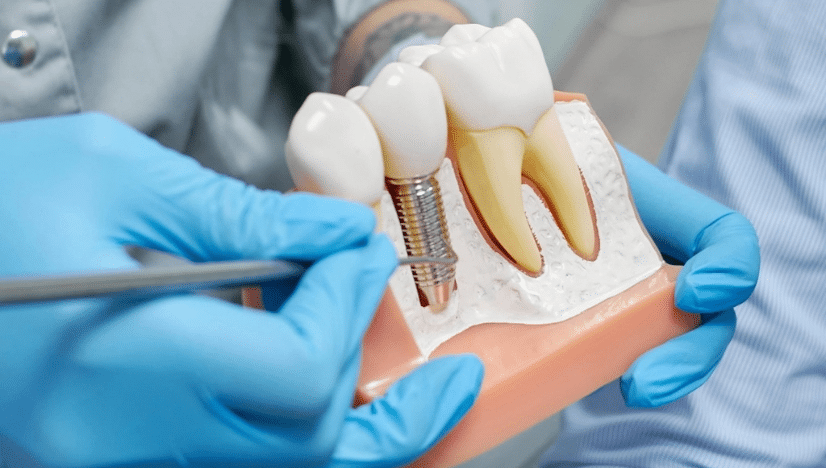
The truth is that while implants can absolutely improve your smile, they are not only about looks. When a tooth is missing, the bone in that area often starts to shrink over time. Neighboring teeth can tilt or shift. Your bite can change, which may affect chewing, jaw comfort, and even your facial shape. A dental implant replaces the root of the missing tooth, which can help preserve bone and support stable chewing function.
Medical references such as the StatPearls review on dental implants describe implants as a functional solution that can restore normal biting forces and reduce some of the problems linked to missing teeth. So while the cosmetic benefit is real, the functional and long term oral health benefits are just as important.
Misconception 3: “Implants are too risky and often fail”
Maybe you have heard a story about an implant that failed or an infection that would not go away. That can be frightening, especially if you already worry about healing slowly or having other medical conditions. Because of this, you might assume that dental implants are a gamble and that losing one would be worse than doing nothing.
Every surgery carries some risk, and it is important not to gloss over that. Possible issues include infection, nerve irritation, sinus problems in the upper jaw, or an implant that does not bond with the bone. However, when placed in healthy candidates by trained professionals, success rates are high. Many studies report long term success rates commonly above 90 percent for properly planned cases.
Conditions such as uncontrolled diabetes, heavy smoking, or untreated gum disease can raise the risk. That is why a careful evaluation is so important. An experienced general and implant dentist will review your medical history, examine your bone and gums, and may recommend additional steps such as bone grafting or periodontal treatment before moving ahead. The goal is not zero risk, because that is impossible, but informed and minimized risk.
Misconception 4: “The recovery will keep me from work and family for weeks”
If you are caring for children, supporting aging parents, or working a busy job, the idea of a long recovery can feel impossible. You might picture yourself swollen, in bed, unable to talk or eat normally for weeks. That fear alone can make you say “I will deal with my teeth later” even as they get worse.
Most straightforward implant surgeries do not require that kind of downtime. Many patients return to desk work within a day or two. Swelling and bruising can happen, especially with more complex procedures, but these usually improve within the first week. You will need to be gentle with the surgical area and follow food restrictions, yet you are not typically “out of commission” for an extended period.
A care guide such as MedlinePlus on dental implant surgery outlines common aftercare instructions. These include soft foods, careful brushing around the area, and avoiding smoking. Your dentist will tailor this to your situation. Planning your schedule in advance and arranging help for the first day or two can make the process feel more manageable and less disruptive.
Misconception 5: “Once the implant is in, I never have to worry about it”
This belief sounds comforting on the surface. You might think of an implant as a permanent fix that needs no more attention than a piece of metal in the jaw. That idea can make the investment feel easier to justify. The problem is that it is only half true.
The implant itself is usually made of titanium, which does not decay like natural tooth enamel. However, the gum and bone surrounding it are still living tissue. They can develop inflammation or infection, known as peri implant disease, especially if plaque builds up. Implants can also be damaged by grinding or clenching, or by not seeing your dentist regularly for checks and professional cleanings.
This is why misunderstandings about dental implant treatment can be so harmful. If someone believes an implant is “maintenance free,” they may skip cleanings or ignore early signs of a problem. In reality, good daily oral hygiene, regular professional care, and sometimes a night guard are important to protect your investment. Implants can last many years, often decades, but they still depend on you and your dental team working together.
How do dental implants compare with other options you might be considering?
It can help to see the tradeoffs clearly. You might be choosing between doing nothing, a removable denture, a fixed bridge, or an implant. Each has its own set of pros and cons in terms of comfort, cost over time, and impact on your remaining teeth and bone.
| Treatment Option | Stability When Chewing | Effect on Neighboring Teeth | Bone Preservation | Typical Longevity |
|---|---|---|---|---|
| Do nothing (leave gap) | Poor, chewing often limited | Teeth may shift or tilt over time | Bone in the gap usually shrinks | Not a solution, problems often worsen |
| Removable partial denture | Moderate, can move or rub | Clasp teeth may experience extra stress | Does not prevent bone loss under missing tooth | May need relining or replacement over years |
| Fixed bridge on natural teeth | Good stability | Neighboring teeth are filed down for crowns | Bone under the gap still tends to shrink | Often 10 years or more with good care |
| Dental implant with crown | High stability, similar to natural tooth | Usually does not require cutting adjacent teeth | Helps stimulate and preserve bone in that area | Can last many years when well maintained |
This comparison is general. Your own situation, including your bite, bone level, medical history, and budget, will shape which option is best for you. A thoughtful conversation with a trusted general and implant dentist can bring these choices into focus instead of leaving you guessing.
Three practical steps you can take right now
1. Write down your fears and your goals
Before meeting any dentist, take a few minutes at home with a pen and paper. List what scares you about dental implant surgery. Pain. Cost. Time off work. Then list what you hope for. Eating comfortably. Smiling without worry. This simple exercise helps you speak clearly during your consultation and makes sure your concerns are heard, not pushed aside.
2. Ask for a thorough implant evaluation, not a quick fix
When you meet with a dentist, ask for a full assessment rather than jumping straight to a yes or no. That might include X rays or 3D scans, a review of your medical conditions and medications, and a discussion of all realistic options, including non implant ones. A careful evaluation respects both your health and your budget, and it reduces the chance of unpleasant surprises later.
3. Plan your support and aftercare in advance
Once you have a proposed treatment plan, talk through the recovery details. Ask how many days you might want to take off work, what foods you should have ready at home, and whether you will need someone to drive you. Setting up this support before the procedure can greatly lower your stress, because you are not trying to figure everything out while you are still numb and tired.
Moving forward with clarity instead of fear
You may still feel nervous about dental implants, and that is completely normal. Fear usually grows in the dark, when you are working with half truths and worst case stories. When you understand what the procedure involves, what the real risks and benefits are, and what your alternatives look like, the fear often becomes something more manageable. It turns into cautious, informed decision making rather than quiet avoidance.
You deserve to eat, speak, and smile without constant worry. Taking the time to question these 5 misconceptions is already a strong step toward that goal. Your next move is simple. Find a dentist who will listen closely, answer every question, and walk you through whether implants are right for you, at your pace and on your terms.