Reading an Arizona Workers’ Comp Lien Itemization: Six Lines That Do Not Belong
Key Takeaways
- A lien itemization should identify each payment, its date, its purpose, and its connection to the work injury.
- Not every number on a carrier ledger belongs in a workers’ compensation lien.
- Duplicate payments, unrelated treatment, estimates, and unexplained fees deserve written follow-up before a third-party settlement is finalized.
- Arizona workers should compare the itemization with medical records, benefit notices, and the proposed settlement distribution.
Why the Itemization Matters
Arizona work injuries often produce more than one file. A delivery driver injured in a Phoenix intersection crash, a construction worker hurt by another contractor, or a Tucson employee struck while traveling for work may have both a workers’ compensation claim and a claim against another responsible party. In that setting, requesting a lien itemization from the carrier helps turn a single demand amount into a list that can actually be checked.
An itemization should answer basic questions: who received the money, when was it paid, what benefit or service did it cover, and why does it relate to the injury involved in the recovery? A total without supporting entries may be difficult to reconcile with medical bills, wage-loss notices, or settlement paperwork.
Under Arizona law, when an employee pursues a third party, the carrier or other party responsible for compensation may have a lien for compensation and medical, surgical, and hospital benefits paid. The statute also describes the amount actually collectible as the recovery less reasonable and necessary expenses, including attorney fees, actually spent to obtain it. Those rules make the underlying payment history important, not merely the total printed at the bottom of a letter. Arizona’s third-party injury statute provides the governing language.
A lien review is not an accusation that every carrier number is wrong. Payment systems can contain corrections, credits, delayed entries, and internal labels. The practical goal is simpler: make sure the claimed amount is supported, injury-related, and current before settlement funds are distributed.
Six Lines That Do Not Belong in a Clean Lien Itemization
1. Duplicate Payments
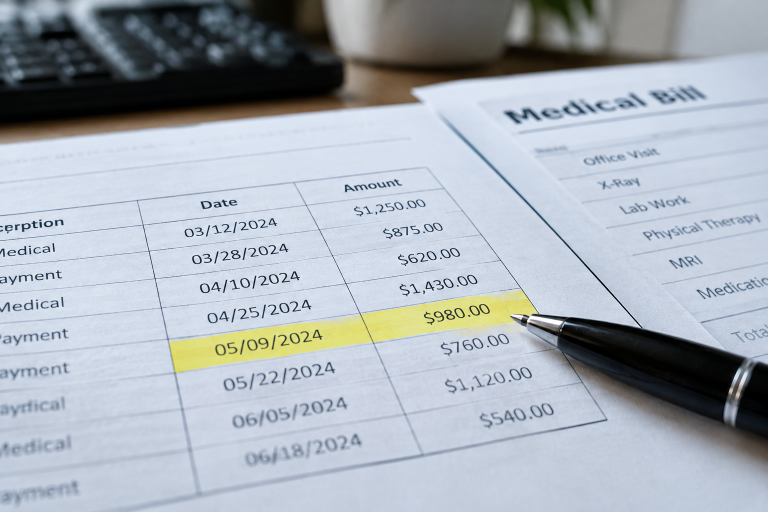
A line that repeats the same provider, service date, amount, and payment description should be investigated. Sometimes two entries reflect separate payments, but the ledger should make that distinction clear. Compare the charge with explanation-of-benefits forms, provider records, and prior lien statements.
2. Treatment Unrelated to the Work Injury
The itemization should tie medical payments to the accepted industrial injury or to treatment reasonably connected with it. A charge with no connection to the injury, or a charge connected to a separate condition, should not be accepted without a clear explanation and supporting records.
3. Future Estimates Presented as Past Payments
A lien is easier to evaluate when it separates money already paid from projected treatment or anticipated benefits. An estimate is not the same thing as a completed payment. If a ledger includes reserves, forecasts, or expected future care, ask that those figures be labeled separately from the paid-benefit total.
4. Unexplained Administrative Charges
File-management labels, vendor expenses, nurse-review entries, or generic administrative costs may appear in claim accounting. A line item that does not identify a benefit paid to or for the injured worker needs clarification. Ask who was paid, what service was received, and why the charge is included in the requested repayment amount.
5. Payments Made After the Relevant Cutoff Date
Settlement negotiations can stretch across weeks or months, especially when medical treatment continues. An itemization should show an “as of” date. If it includes payments made after a proposed settlement date, determine whether the settlement terms account for them and whether the carrier has provided an updated demand.
6. A Lump Sum With No Payee, Date, or Description
A large entry described only as “medical,” “indemnity,” or “expense” is not a useful itemization. Medical payments and wage-replacement benefits may be treated differently in the records, so each entry should provide enough detail to verify it against the claim file.
How to Review the Numbers
Start with a simple list or spreadsheet. For every lien entry, record the payment date, payee, amount, description, document supporting it, and whether it appears related to the injury. Then compare that list with the carrier’s total.
- Medical payments: Match the provider, treatment date, and amount to bills or benefit statements.
- Compensation payments: Compare wage-benefit entries with notices or payment records.
- Credits and recoveries: Check whether refunds, reversals, or provider adjustments appear as offsets.
- Settlement statement: Confirm that the proposed deduction uses the most recent written lien figure.
- Release language: Read what claims, payments, and parties are being addressed before signing.
Arizona’s Industrial Commission provides general information for injured workers, including information about the claims process and available forms. Its workers’ compensation general information can be a useful starting point for understanding the administrative side of an industrial claim. It does not replace advice tailored to a specific lien dispute or settlement.
Questions to Ask Before Signing
- What is the exact date through which this lien was calculated?
- Can the carrier provide records supporting each listed payment?
- Which entries are medical payments, and which are wage or compensation benefits?
- Are any entries projected costs, reserves, or estimates rather than completed payments?
- Does the total include any duplicate, reversed, or credited transactions?
- Does every medical charge relate to the injury involved in the third-party recovery?
- Has the final distribution statement been updated to match the latest written demand?
Put focused questions in writing and keep the response with the settlement file. A short request identifying the specific date, provider, or unexplained amount is usually easier to address than a general objection to the lien total.
Why Timing Matters
Numbers can change while a claim remains open. New treatment, compensation payments, billing corrections, and provider adjustments can all affect a ledger. Request a current itemization before finalizing a settlement, then compare it again with the final distribution statement. This is particularly important where a settlement requires carrier approval or where future workers’ compensation benefits may be affected.
Keep copies of the final itemization, any written lien resolution, the settlement statement, proof of payment, and the signed release. Those documents create a clearer record if a question arises after funds have been distributed.
Final Checklist
- Current lien itemization with an “as of” date
- Supporting payment records for each material entry
- Medical bills and benefit notices for comparison
- A written list of disputed or unclear lines
- The proposed settlement distribution statement
- The release and any required written approvals
- Proof of the final lien payment or resolution
A careful review does not require accounting expertise. It requires organized records, current numbers, and a willingness to ask why each line appears. Before funds are divided, make sure the lien reflects documented payments connected to the Arizona work injury, not duplicates, estimates, or unexplained additions.