Innovative Batch Mixing Techniques for Modern Food Production
Key Takeaways
- Emerging batch-mixing technologies can reduce processing times and improve the uniformity of complex ingredient blends.
- Automation and data-led controls drive precision, reduce operator error, and create sustainable advantages in production lines.
- New mixing methods allow manufacturers to reduce energy consumption, align with clean-label trends, and yield higher throughput with less waste.
Table of Contents
- High-Shear Powder Injection Systems
- Rotary Batch Mixing
- Inline Mixing Systems
- Automation and Smart Controls
- Vacuum Mixing Systems
- Resonant Acoustic Mixing (RAM)
- Conclusion
Modern food processing demands technology that keeps pace with the increasing need for quality, efficiency, and sustainability. From multinational food brands to specialized producers, the market’s expectations for consistency and safety continue to climb. Central to achieving these outcomes is batch mixing, a fundamental component in the manufacture of everything from sauces to nutritional powders. With continuous innovation, companies have access to advanced solutions such as high-shear systems, rotary batch mixers, and automation, enabling them to stay competitive while maintaining strict compliance. For those seeking the ideal equipment partner, a reputable commercial drum blender manufacturer can address specific production and scalability concerns.
Today’s batch-mixing technology not only supports high product throughput but also delivers significant improvements in uniformity and processing time. Integrating smart controls, vacuum capabilities, and novel energy sources builds operational resilience and production flexibility. In turn, mixing strategies impact everything from shelf life and ingredient inclusion to sustainability goals, guiding food manufacturers toward superior consumer experiences.
High-Shear Powder Injection Systems
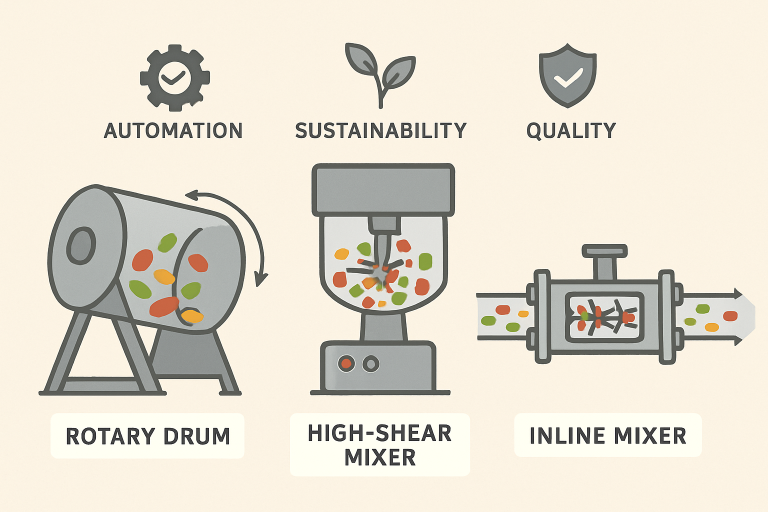
One of the most transformative innovations in industrial food mixing is the high-shear powder injection system. This method delivers remarkable efficiency gains by drawing powders into liquids under vacuum and applying intense shear. The process not only speeds up blending, often reducing mix times by half, but also helps manufacturers handle ingredients that traditionally present challenges, such as starches or gums, without lumps or “fish eyes.” By optimizing integration, these systems can boost plant output and reduce product waste, especially in dairy, beverage, and confectionery applications. According to ROSS Mixers, high-shear systems outperform traditional mixers for blending difficult-to-wet powders.
Rotary Batch Mixing
Rotary batch mixers provide a leap forward for food manufacturers needing to blend complex ingredient lists quickly and uniformly. The principle behind rotary mixing is simple: the entire drum rotates, causing internal materials to tumble and blend. Automated baffles ensure even circulation. The result is a rapid, repeatable mix from batch to batch. In the nutraceutical sector, companies have cut their blending cycles from nearly an hour to just a few minutes by implementing rotary batch technology. This not only boosts capacity and throughput but also improves product consistency and reduces downtime between cycles. These attributes make rotary batch mixers an attractive choice for both large-volume food brands and process scale-ups.
Inline Mixing Systems
Inline mixing changes the paradigm by bringing continuous mixing directly into the production stream. Unlike traditional batch mixers, which require staging and transfer, inline systems blend ingredients on the move, maintaining homogeneous mixtures even at high throughputs. These systems can handle products with up to 80 percent solids content, delivering a uniform texture while minimizing manual intervention. The real benefit lies in continuous operation, helping plants save valuable time and reduce ingredient stratification, which often leads to inconsistent product batches. A report by Alfa Laval confirms that inline mixing systems can increase yield and improve production quality, especially for high-value, sensitive formulations.
Automation and Smart Controls
The introduction of AI-driven controls has revolutionized process optimization in batch mixing. Today’s systems gather live data from sensors that monitor variables such as viscosity, temperature, and flow. Algorithms analyze this data in real time and automatically adjust mixing parameters, taking the guesswork out of manual control and minimizing operator error. Digital twins, virtual models that simulate and predict process outcomes, enable engineers to test formulations and changes without risking actual product or wasting raw materials. These innovations help drive sustainability while reducing project development cycles across the food sector. Automation also provides reporting and traceability tools for compliance with rigorous food safety regulations and quality standards.
Vacuum Mixing Systems
As natural and minimally processed foods gain popularity, vacuum mixing systems are becoming indispensable tools in commercial kitchens and large-scale plants. The removal of air during the mixing phase results in a denser, creamier, and more stable product, which is critical for foods such as dressings, dairy desserts, and ready-to-eat meals. The elimination of air not only extends shelf life but also supports “clean-label” production by reducing the need for preservatives. Vacuum mixers also prevent oxidation, which can degrade flavors and nutrients, helping brands deliver fresher-tasting products to consumers. This aligns with shifting market demands for food products with fewer additives and more authentic taste profiles.
Resonant Acoustic Mixing (RAM)
Resonant Acoustic Mixing, or RAM, represents an entirely different approach to batch mixing. By leveraging sound waves, RAM efficiently disperses ingredients without the need for mechanical agitators. This technique reduces cleaning requirements, thereby decreasing water and energy use, and significantly shortens batch times. It is particularly valuable for sensitive or viscous formulations, where over-mixing can impair product quality. RAM preserves the structural integrity of delicate inclusions, such as fruit pieces or nutraceutical actives, making it ideal for specialty products with unique texture or ingredient requirements. This advanced technology reflects the broader movement toward gentle processing, lower utility costs, and waste minimization.
Conclusion
The evolution of batch mixing technology is central to the progress of food manufacturing, touching on everything from product quality to plant sustainability. By integrating high-shear, rotary, inline, vacuum, and resonance-based techniques, modern food facilities can achieve greater efficiency, safety, and adaptability. Embracing these advances allows producers to respond quickly to market trends, manage ingredient complexity, and minimize resource consumption. As regulatory and consumer expectations continue to rise, leveraging these innovative solutions will be vital for lasting success in food production.