How Does a Robotic Welder Transform Modern Manufacturing
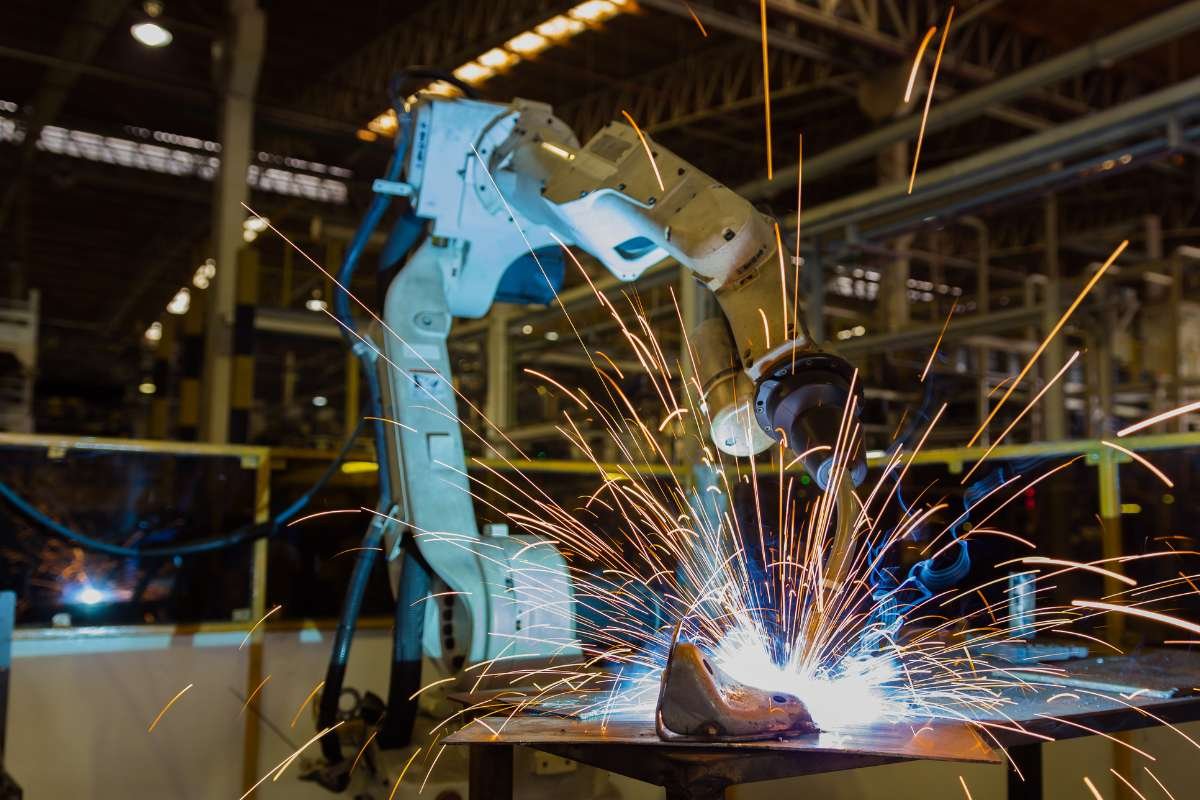
In recent years, manufacturing has undergone major changes driven by rapid global competition, increasing costs, and higher quality standards. Automation is now central to this transformation, with robotic welders playing a key role. These programmable machines handle welding tasks quickly and accurately, running nonstop while ensuring consistent quality.
They also improve safety and boost efficiency, making robotic welders essential in industries such as automotive, heavy machinery, and oil & gas.
In this article, let’s explore how robotic welding creates these benefits and the challenges businesses face when adopting it.
Understanding Robotic Welding Technology
Robotic welding uses robots with arms that are programmed to do welding work very accurately. These robots follow exact instructions and can make automatic adjustments using sensors or cameras. This makes them ideal for industries like automotive, aerospace, and heavy equipment, where lots of consistent, repetitive welding is needed.
Types of Robotic Welding
Arc Welding (MIG/TIG): Common and versatile. MIG is fast for thick materials; TIG is precise for thin or special materials.
Spot Welding: A fast welding method that joins metal at specific points, commonly used for sheet metal and car parts.
Laser Welding: Uses a focused laser for precise, low-heat welds, perfect for delicate electronics and medical devices.
Plasma Welding: Creates deep, strong welds for specialized applications.
Challenges of Robotic Welding
High upfront cost for robots, setup, and programming.
Less flexible for small batches or frequent design changes.
Needs skilled staff to program, maintain, and troubleshoot.
Risk of downtime if the system fails.
Robotic welding speeds up large-scale production while improving safety and consistency. However, it requires a significant investment, skilled operators, and is most effective for repetitive, high-volume tasks.
Integrating a Welding Cobot into the Workflow
To successfully use a welding cobot, welders need to follow a series of steps that enhance both safety and efficiency:
Assess Safety Risks: Start by identifying potential hazards in the workspace. This is done through a risk assessment and by following safety standards like ISO-10218-4 and TS-15066.
Prepare the Workspace: Make sure the cobot can move safely by clearing paths, installing spatter guards, and organizing cables to prevent trips or interference with equipment.
Connect to Welding Equipment: The cobot must be mechanically and electrically linked to the welding system so that both work together smoothly.
Program the Cobot: Welders use teaching pendants, hand-guiding tools, and user-friendly software to create precise weld paths. Programs can be saved and reused for repetitive tasks, reducing setup time. Some systems allow simplified programming of complex weld sequences using drag-and-drop interfaces.
Enhance Precision with Sensors: Adding touch sensing and seam tracking sensors helps the cobot adjust to changes in joint positions and variations in fit-up, ensuring consistent weld quality.
By carefully preparing the workspace, properly connecting the equipment, programming the cobot, and using sensors, welders can integrate welding cobots effectively. This leads to safer work conditions, more efficient operations, and consistently high-quality welds.
Key Ways a Robotic Welder Transforms Manufacturing
Increased Efficiency & Productivity
Robotic welders make welding much faster and more efficient. They move quickly between weld points, keep the weld steady, and never get tired. Some systems have even cut welding time by over 60%. Since robots can work around the clock without breaks, factories can produce far more compared to relying only on human welders.
Enhanced Precision & Quality
Robotic welders deliver consistent, high-quality welds by following precise settings for angle, speed, and current on every job. This accuracy helps prevent common welding defects such as porosity and undercuts. Fewer mistakes lead to less waste, less rework, and more savings.
Improved Worker Safety
Robotic welders make workplaces safer by doing the dangerous welding work, keeping workers away from sparks, fumes, and extreme heat. This allows skilled employees to focus on safer tasks, reducing fatigue and the risk of injuries.
Cost-Effectiveness in the Long Run
Robotic welders save manufacturers money over time. They need fewer workers, which cuts labor costs, and they reduce wasted materials by avoiding over-welding, sparks, and defective parts. Combined with faster production and fewer errors, this results in a good return on the initial investment.
Scalability & Flexibility
Modern robotic welders are adaptable and can be reprogrammed for different welding methods (MIG, TIG, spot, laser) and tasks, allowing flexibility without major changes. They work well for both large-scale production and smaller or custom projects when properly set up.
Industry Applications of Robotic Welders
Robotic welders are used in many industries to make welding faster, more precise, and safer:
Automotive Manufacturing
Assemble car frames and body panels.
Perform spot and MIG welding on doors, roofs, and chassis.
Ensure consistent quality, speed up production, and reduce errors.
Aerospace and Defense
Weld important parts made of aluminum and titanium.
Use TIG and laser welding for strong, accurate joints.
Applied in aircraft and spacecraft assembly, including fuselage panels and structural components.
Construction and Heavy Equipment
Build steel structures, bridges, and heavy machinery parts.
Perform butt and fillet welding on thick materials for durable joints.
Automate heavy fabrication in construction, mining, and agriculture.
Electronics and Small Components
Assemble small, delicate parts like connectors and sensors.
Use laser or micro TIG welding for precise, clean joints.
Increase production speed and maintain consistent quality without damaging sensitive parts.
Robotic welding is flexible and efficient, improving safety, quality, and productivity in many industries.
Challenges and Considerations
High Initial Investment – Robotic welding systems require a significant upfront cost. This includes buying the robots, installing safety equipment, setting up the system, and training staff to operate it efficiently.
Training and Workforce Integration – Skilled operators and technicians are vital for programming, operating, and maintaining robotic welding systems. Without proper training, productivity drops, weld quality suffers, and operational issues may arise.
Maintenance and Technical Expertise – Robotic systems need regular maintenance, calibration, and occasional specialized repairs. A preventive maintenance plan and trained personnel are crucial to minimize downtime and extend equipment life.
Careful planning, proper training, and a strong maintenance routine are key to overcoming these challenges and maximizing the benefits of robotic welding.
Future of Robotic Welding in Manufacturing
Robotic welding is advancing rapidly, driven by AI, IoT, and more affordable systems for small and medium-sized businesses.
AI-Powered Welding
Artificial intelligence enables robotic welders to adjust automatically to changes in materials, joint shapes, and working conditions. It controls welding speed, heat, and angle to ensure consistent, high-quality welds. AI can also detect defects and correct them immediately, reducing errors and material waste.
Connected Manufacturing with IoT
Modern robotic welders can connect to smart networks. Sensors and data tools monitor performance in real time, predict maintenance needs, and help minimize downtime. Cloud-based systems let manufacturers manage welding processes across multiple locations from a single platform.
Easier Access for Small Businesses
Advances in technology have made robotic welding simpler and cheaper for small and medium-sized companies. Collaborative robots (cobots) are small, easy to program, and cost-effective. By 2025, 40% of small fabricators will already use robots for at least one welding task, helping them boost productivity, improve quality, and cope with labor shortages.
Robotic welding is becoming smarter, safer, and easier to use, helping manufacturers work faster and more precisely