How CPAs Ensure Financial Integrity During Economic Downturns
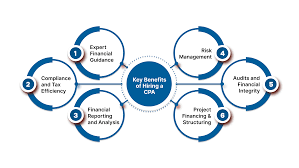
You might be feeling like the ground keeps shifting under your feet. Revenue is unpredictable, forecasts feel useless, and every new headline makes you wonder what the next quarter will look like. A Tomball Certified Public Accountant can help you interpret the numbers, stress-test scenarios, and regain a sense of control. Before the downturn, decisions felt more straightforward. Now, every choice seems loaded with risk.end
If you are responsible for financial decisions, that pressure can feel very personal. You are trying to protect cash, keep lenders calm, reassure employees, and still stay honest and transparent. It is exhausting. You may even be asking yourself whether you are missing something important that could come back to haunt you later.
This is where a trusted Certified Public Accountant can act as both a guardrail and a guide. In plain terms, the role of a CPA in a downturn is to keep the numbers honest, the risks visible, and the decisions defensible. That means strengthening internal controls, sharpening disclosures, and stress testing your financial assumptions so that you do not drift into wishful thinking.
So, where does that leave you right now? The short answer is that you are not supposed to have all the answers. You are supposed to have a process and the right people around you. A CPA helps build that process so your financial integrity holds, even when the economy does not.
Why economic downturns test financial integrity so severely
When the economy turns, the pressure on numbers increases from every direction. Lenders want more information. Investors demand clarity and speed. Boards ask for scenarios instead of single plans. Employees want reassurance that salaries and jobs are safe. Because of this tension, the temptation to smooth the story or delay bad news can creep in quietly.
Regulators understand this pattern. For example, the U.S. Securities and Exchange Commission has issued disclosure guidance for crises like COVID 19, reminding companies that vague or incomplete disclosures can mislead investors. That guidance is not just about legal compliance. It is about honesty in a time when people are making hard choices with incomplete information.
On top of that, auditors and oversight bodies watch downturns closely. The Public Company Accounting Oversight Board shared staff observations during COVID 19 about issues like going concern, internal controls, and estimates. These are the exact areas that tend to crack when businesses are under stress.
So what happens when financial integrity slips, even a little? A company might overstate inventory to hit a bank covenant. Or delay recognizing an impairment because leadership hopes for a quick rebound. Or use aggressive revenue recognition to “buy time.” At first, this can feel like a small adjustment. Over time, it becomes a pattern that is hard to unwind without embarrassment, legal risk, or worse.
This is why maintaining financial stability in a downturn is as much about discipline as it is about strategy. You are not just trying to survive the next quarter. You are trying to avoid decisions that your future self will have to explain in an investigation, an audit committee meeting, or a courtroom.
How CPAs protect financial integrity when the pressure rises
So how does a CPA help you hold the line when everything feels uncertain?
First, a CPA challenges assumptions. If sales projections are based on “things going back to normal soon,” a good CPA will push for scenarios that assume slower recovery, loss of key customers, or supply interruptions. This does not make you pessimistic. It makes you prepared.
Second, a CPA tightens internal controls at the very moment when shortcuts become tempting. For example, if one person suddenly has both approval and recording authority because of staff cuts, the risk of errors or fraud jumps. A CPA can redesign workflows so that segregation of duties still exists, even with fewer people.
Third, a CPA helps you communicate clearly with stakeholders. That can mean revisiting disclosures, earnings calls, board decks, or lender updates. The goal is to align what you say externally with what the numbers actually support. The SEC’s crisis guidance is very clear on the need for specific, forward looking information instead of generic statements about “uncertainty.” A CPA can help you strike that balance between caution and candor.
Finally, a CPA keeps an eye on the banking side. Research from the FDIC’s community banking research program highlights how downturns affect credit quality, capital, and liquidity. A CPA who understands this environment can help you anticipate how your bank might react, what ratios will matter most, and how to avoid covenant breaches before they happen.
Put simply, CPAs supporting financial resilience in recessions do not just “close the books.” They build guardrails around your decisions when emotions are high and room for error is small.
DIY controls vs working with a CPA during a downturn
You might be wondering whether you can manage this on your own, at least for a while. There is nothing wrong with that question. The key is to be clear about what is at stake if you choose a do it yourself approach instead of partnering with a CPA.
| Area | DIY Approach | Working With a CPA |
| Financial forecasts and scenarios | Often based on internal optimism or simple trend lines. Limited stress testing of worst case situations. | Structured scenarios with downside, base, and upside cases. Assumptions challenged and documented. |
| Internal controls under cost pressure | Staff cuts may weaken checks and balances without realizing it. | Controls redesigned for a lean environment. Clear accountability and oversight preserved. |
| Regulatory and disclosure expectations | Reliance on internal interpretations. Risk of missing updated guidance. | Use of current guidance from regulators and auditors. Stronger alignment with investor expectations. |
| Bank and lender relationships | Reactive conversations when problems appear. Limited preparation for covenant discussions. | Proactive analysis of ratios and cash flow. Early engagement with lenders based on credible numbers. |
| Fraud and error risk | Higher, especially if one person “wears many hats” without independent review. | Targeted testing and review procedures. Clear audit trails and documentation. |
| Leadership peace of mind | Ongoing worry about what might have been missed. Decisions feel heavier. | Shared responsibility for the integrity of the numbers. Decisions feel more grounded. |
There is no shame in starting with a DIY approach. The turning point is recognizing when the risk of being wrong is greater than the cost of bringing in a professional.
Three practical steps you can take right now
1. Map your pressure points before they become failures
Start by listing the areas where a downturn hits you hardest. For many organizations, that includes cash collections, inventory, debt covenants, and key customer concentration. Ask yourself three questions for each area. How accurate is the data I see each week. Who checks it independently. What is the worst realistic outcome if this number is wrong.
This simple exercise often reveals blind spots. For example, you might discover that only one person understands a complex covenant calculation, or that inventory adjustments are made without review. These are places where a CPA can help you shore up controls quickly.
2. Build a “downturn disclosure” mindset
Even if you are not a public company, act as though you had to explain your financial condition to a skeptical but fair outsider. That outsider could be a lender, a buyer, or a regulator. Ask what they would reasonably expect you to disclose about risks, uncertainties, and assumptions during a downturn.
Then compare that with what you actually share today, both internally and externally. Are you transparent about your most sensitive assumptions. Do your internal forecasts match the story you tell your board or your bank. A CPA can help you close the gap so that your disclosures, formal or informal, are aligned with reality.
3. Use your CPA as a strategic partner, not just a technician
When you think of a Certified Public Accountant, you might picture tax returns or year end audits. In a downturn, the value is much broader. Invite your CPA into conversations about scenario planning, cost reductions, and funding options. Share the hard questions you are wrestling with, not just the numbers you need processed.
A good CPA will help you weigh tradeoffs, such as whether to cut staff or negotiate extended terms, or how to time capital expenditures. They can also help you document your decision process. That documentation matters if your choices are ever questioned by owners, regulators, or courts.
Holding your financial integrity when everything feels uncertain
Economic downturns do not last forever, but the consequences of rushed or distorted financial decisions can. When you focus on integrity, you give yourself two gifts. First, you reduce the risk of painful surprises. Second, you preserve trust with the people who matter most to your organization.
You do not have to carry that burden alone. By working with a CPA who understands how to protect financial integrity under stress, you create a buffer between the chaos of the outside world and the discipline of your internal numbers. That buffer gives you room to think clearly, act decisively, and sleep a bit better at night.
The next step is simple. Identify where your current financial process feels most fragile, then involve a CPA to help you strengthen those areas before they crack. Even small improvements in controls, disclosures, and forecasting can make a real difference when the economy is working against you.