Future-Proofing Critical Infrastructure with Advanced Wireless Alarm Monitoring Systems

Table of Contents
- Evolution of Alarm Monitoring
- Key Features of Advanced Wireless Systems
- Benefits of Wireless Alarm Monitoring
- Integration with Existing Infrastructure
- Case Studies in Critical Infrastructure
- Future Trends in Alarm Monitoring
- Conclusion
Securing critical infrastructure remains a top priority as cyber and physical threats become more complex and persistent. The landscape of risk management has grown to encompass not only physical security breaches but also technological vulnerabilities. For organizations seeking robust solutions, integrating cellular monitoring systems into their safety protocols is a smart, proactive investment. Advanced systems are transforming protection, giving operators agility and intelligence to face current and future challenges. Traditional wired alarms are limited by physical reach and vulnerability. Wireless technology enables flexible, adaptive security for both new and legacy infrastructures, delivering secure coverage, faster alerts, and greater resilience. As interconnected energy grids, transportation hubs, and municipal resources grow, robust wireless alarms become essential. They also support remote management, allowing security teams to monitor remote sites in real time and reducing travel costs. Wireless alarms serve as a risk-mitigation hub for many critical infrastructures, detecting breaches, environmental events, and cyber threats promptly. As infrastructure evolves, so must security methods. This article examines trends, features, and real-world results of advanced wireless alarm monitoring, essential for future-proofing vital systems.
Evolution of Alarm Monitoring
The history of alarm monitoring technology reflects the broader push toward automation and immediacy within security operations. Early alarm systems depended heavily on local guards, on-site personnel, or analog connections to transmit alerts. This made them slow to react and largely reactive. With the rise of digital networks and wireless connectivity, monitoring systems can deliver instant alerts, access comprehensive sensor data, and enable proactive threat deterrence across vast, complex facilities. Major advancements in wireless signal strength, redundancy protocols, and device interoperability have set today’s systems apart from their predecessors, enabling reliable event detection and faster event escalation.
Key Features of Advanced Wireless Systems
Advanced wireless alarm monitoring solutions offer several key capabilities that enhance security measures compared to older wired systems. These include real-time data transmission, which enables rapid relay of sensor data and alerts to monitoring teams, ensuring immediate responses to anomalies or breaches. Additionally, remote access via web-based dashboards and mobile applications enables security personnel to manage alerts from any location with an internet connection. Scalability is another advantage, enabling the easy addition of new sensors and devices without physical rewiring, making it simpler to adapt to changing risk factors. Finally, these modern systems seamlessly integrate with IoT devices, enhancing situational awareness by connecting to a range of smart sensors and industrial control platforms.
Benefits of Wireless Alarm Monitoring
Enhanced security through continuous monitoring at multiple points of vulnerability reduces risks and deters potential intruders or saboteurs. Wireless alarms maintain situational awareness in areas where physical patrols are impractical. These systems contribute to cost efficiency by reducing total ownership costs by cutting installation and maintenance expenses. They can be deployed quickly and adjusted to meet evolving facility needs, minimizing disruption. Additionally, wireless platforms offer flexibility, enabling rapid expansion of surveillance and alarm coverage into new zones or construction areas as operations change. Improved reliability is achieved through built-in redundancies, such as dual-path communication and battery backup, ensuring monitoring remains active during power outages or network failures, thus elevating operator confidence in protecting essential utilities.
Integration with Existing Infrastructure
Advanced wireless alarm monitoring systems are designed to complement legacy controls, sensors, and IT networks without causing costly disruptions. Many systems facilitate an easy transition, starting with a compatibility assessment to ensure the new technology aligns with older equipment, especially in sectors where full equipment replacement is impractical. Cybersecurity has become a key concern, requiring robust encryption, authentication, and ongoing digital risk management to defend against hacking and tampering. Staff training and clear event protocols further ensure operational readiness. Creating a seamless bridge between new and existing security systems provides holistic oversight for mission-critical operations.
Case Studies in Critical Infrastructure
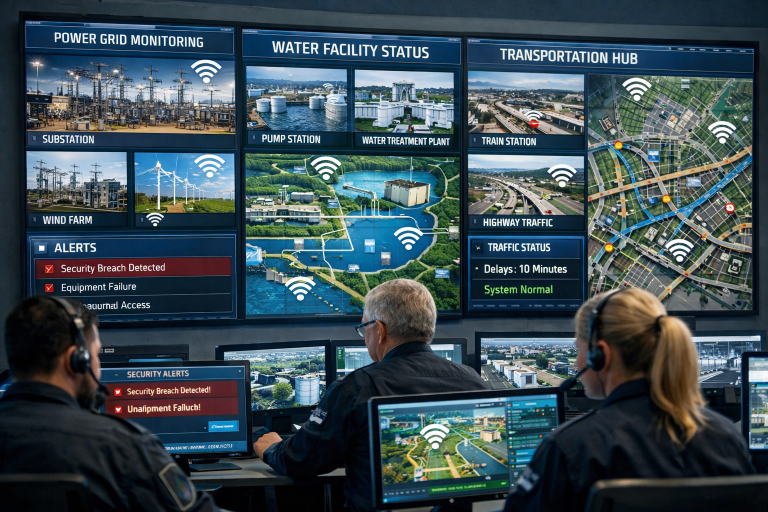
- Energy Sector: Power stations and utilities use wireless alarm monitoring to oversee remote equipment, detect early warning signs of malfunction, and automate responses to reduce downtime. A real-world example is the implementation of these systems at energy substations, which has been shown to improve grid fault management and overall safety.
- Transportation: Airports and national railway operators have adopted wireless solutions to strengthen perimeter security, track passenger flows, and react quickly to emergencies. These monitoring systems streamline the coordination between multiple stakeholders and emergency services.
- Water Treatment Facilities: Municipal and regional water authorities employ wireless alarm networks to detect leaks, unauthorized access, and environmental hazards, maintaining compliance and protecting public health. According to ICMA, wireless monitoring has become a core tool in safeguarding water infrastructure.
Future Trends in Alarm Monitoring
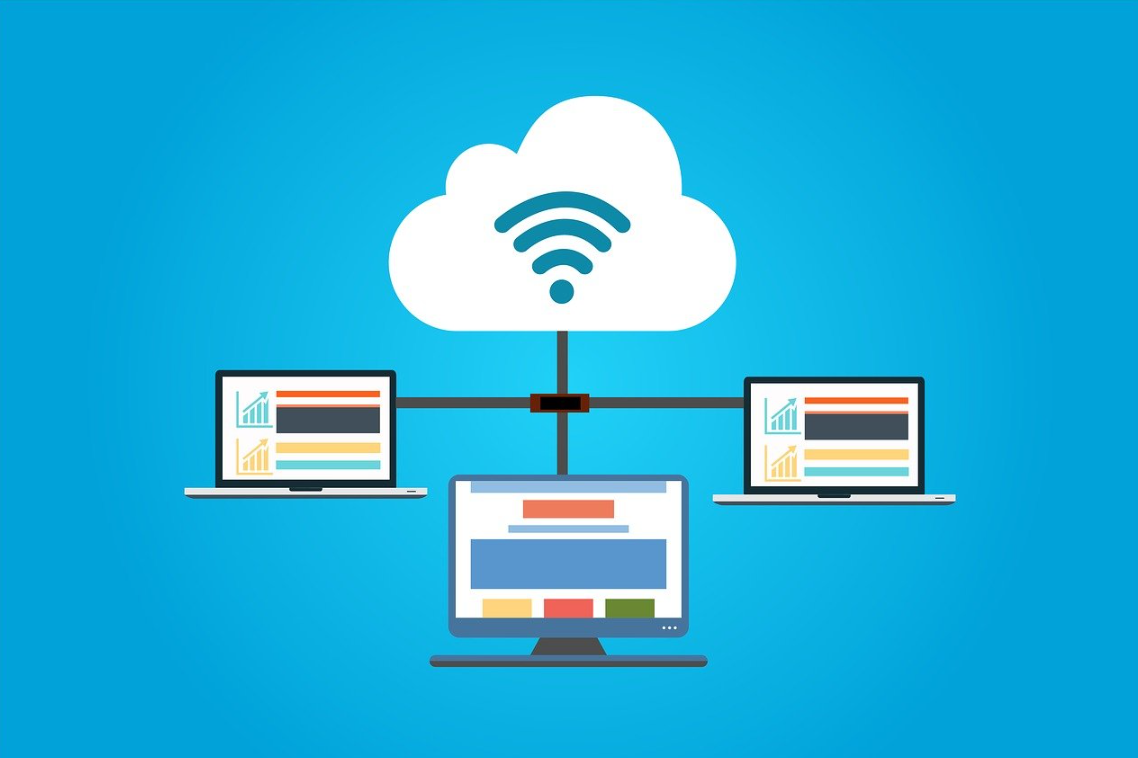
Artificial Intelligence (AI) will play a crucial role in enhancing incident management by analyzing sensor data, automating threat recognition, and minimizing false positives. The advent of 5G connectivity will further improve alarm systems with enhanced speeds and network reliability, facilitating a hyper-connected infrastructure and enabling near-instant notifications. Moreover, integrating cloud technology will provide centralized data storage and advanced analytics, enhancing scalability and real-time event correlation while ensuring secure, long-term recordkeeping.
Conclusion
In an age when infrastructure is as vulnerable to digital threats as it is to physical ones, advanced wireless alarm monitoring systems represent an essential shield. Organizations that adopt these technologies benefit from top-tier security, lower lifecycle costs, and adaptive coverage that can meet evolving risks. As global reliance on critical infrastructure grows, only proactive investment in modern alarm monitoring will ensure that utilities, transportation, and municipal services can continue to function safely and reliably for years to come.