Fire Protection Services: A Complete Guide to Safer Homes and Businesses
Fire can become a serious threat within minutes. A small electrical fault, an overheated appliance, or an unattended cooking area can quickly turn into a dangerous situation. While alarms and extinguishers are important, effective fire safety involves much more than keeping emergency equipment nearby.
We need to think about fire protection as a complete system. It combines prevention, early detection, emergency planning, suitable equipment, and professional inspections. When these elements work together, homes and workplaces have a much better chance of limiting damage and protecting people.
Why Fire Safety Needs a Complete Approach
Many people only think about fire safety after an incident occurs. However, preparation is most valuable before an emergency begins.
A good fire safety plan starts by identifying possible hazards. In a home, these may include overloaded power outlets, cooking equipment, heaters, candles, and damaged electrical cables. Commercial properties can have additional risks, including machinery, combustible materials, storage areas, kitchens, and electrical installations.
Once these risks are identified, sensible precautions can be introduced. This might include maintaining electrical systems, keeping flammable materials away from heat sources, installing suitable alarms, and ensuring that emergency exits remain clear.
Professional fire protection services can also help property owners understand which safety measures are appropriate for their particular building and circumstances.
Fire Detection Should Come Early
One of the most important parts of fire safety is early detection. A fire that is discovered quickly is generally easier to control than one that remains unnoticed.
Smoke alarms can provide an early warning when smoke enters the sensing chamber. Depending on the building, other detection technologies may also be appropriate. Larger commercial premises can require more advanced systems that connect multiple detectors and provide information about where an alarm has been triggered.
Regular testing matters just as much as installation. Batteries need to be replaced when necessary, devices should be checked according to the manufacturer’s instructions, and faulty equipment should not be ignored.
A detector that does not work during an emergency provides no meaningful protection.
Fire Extinguishers Have an Important Role
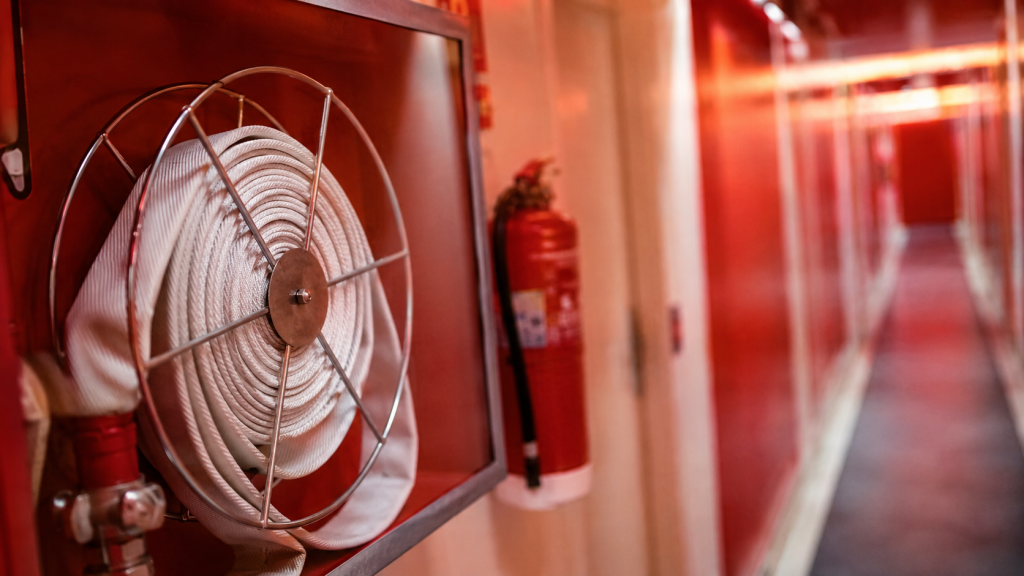
Fire extinguishers can be useful for dealing with small fires when it is safe to do so. However, not every extinguisher is designed for every type of fire.
Different fires can involve materials such as paper, wood, flammable liquids, cooking oils, or electrical equipment. Using the wrong type of extinguisher can make a situation more dangerous.
For that reason, businesses should select extinguishers according to the risks present on their premises. They should also be positioned where people can access them quickly without putting themselves in unnecessary danger.
Training is another important consideration. Employees may know where an extinguisher is located but still be unsure about how to use it correctly. Basic fire safety training can help people respond more confidently during an emergency.
Emergency Exits Must Stay Accessible
A fire evacuation plan is only useful when people can actually follow it.
Emergency routes should be clearly identified and kept free from boxes, furniture, equipment, and other obstacles. Doors used for evacuation should be maintained properly, and occupants should know where they are expected to go after leaving the building.
Businesses should also consider people who may need additional assistance during an evacuation. Visitors, new employees, children, older people, and individuals with mobility difficulties may require additional planning.
Regular evacuation drills can help reveal problems before a real emergency occurs. A drill may show that an exit is difficult to reach, an alarm cannot be heard in part of the building, or employees are unclear about where to assemble.
Regular Inspections Can Prevent Bigger Problems
Fire safety equipment can deteriorate over time. Alarms can develop faults, extinguishers can become damaged, emergency lighting can fail, and other protective systems may require maintenance.
Routine inspections help identify these problems before they become serious.
For businesses, maintaining records of inspections, testing, repairs, and staff training can also make fire safety management more organised. Property managers can use these records to track outstanding issues and ensure that important checks are not forgotten.
The exact inspection requirements can vary depending on the building, equipment, local regulations, and type of occupancy. Professional advice is therefore valuable when a property has complex fire risks or specialised systems.
Electrical Safety Deserves Special Attention
Electrical problems are a common concern in many properties. Damaged cables, faulty appliances, overloaded sockets, and poor-quality electrical work can all create potential hazards.
Simple habits can reduce unnecessary risk. Appliances should be maintained properly, damaged cords should be replaced, and electrical outlets should not be overloaded. Portable heaters and other high-powered devices also deserve particular attention.
Businesses with extensive electrical equipment should have appropriate inspection and maintenance procedures in place. Preventive maintenance can reduce the likelihood of faults while helping identify unsafe conditions.
Kitchens Require Extra Care
Cooking areas can present significant fire risks because they combine heat, electricity, gas, oils, and combustible materials.
Grease and cooking-oil fires require particular caution. Water should never be thrown onto a cooking-oil fire because it can cause burning oil to spread rapidly.
Commercial kitchens can have even greater risks because of high-volume cooking equipment and grease accumulation. Suitable suppression systems, ventilation maintenance, staff training, and appropriate emergency equipment can all contribute to safer operations.
Keeping combustible items away from hot surfaces is another simple but effective precaution.
Fire Safety Training Builds Confidence
Equipment alone cannot create a safe environment. People also need to know how to respond.
Staff training can cover alarm procedures, evacuation routes, emergency contacts, extinguisher awareness, and the importance of reporting hazards. Employees should understand that protecting people comes before protecting property.
Training can also reduce confusion during an emergency. When responsibilities and evacuation procedures have already been discussed, people are less likely to waste valuable time deciding what to do.
New employees should receive appropriate safety information, while existing staff can benefit from periodic refresher training.
Choosing the Right Protection for a Property
Every property has different needs. A small home does not have the same risks as a warehouse, restaurant, office, workshop, or retail premises.
The building’s size, layout, occupancy, equipment, stored materials, and potential ignition sources should all be considered when developing a fire safety strategy.
Rather than simply buying the most equipment possible, property owners should focus on creating a balanced system. Detection, prevention, suppression, evacuation, maintenance, and training should support one another.
A Safer Property Starts With Preparation
Fire protection is not a single product or one-time task. It is an ongoing process that requires attention and maintenance.
When property owners identify hazards early, maintain safety equipment, keep evacuation routes clear, train occupants, and arrange appropriate inspections, they create a stronger defence against fire-related emergencies.
The most effective approach is straightforward: understand the risks, prepare for emergencies, maintain protective systems, and make sure everyone knows what to do. Good preparation cannot eliminate every possible fire, but it can significantly improve the ability to detect problems early, respond appropriately, and protect people when it matters most.