Owsley Chiropractic Helps Bowling Green, KY Patients Move Beyond Back Pain With Personalized, Non-Surgical Care in 2026
Key Takeaways
- Back pain can affect more than comfort. It can limit sleep, work, exercise, driving, lifting, and everyday movement.
- Owsley Chiropractic in Bowling Green, Kentucky, offers a personalized approach that may include chiropractic care, massage therapy, functional movement training, passive modalities, and electrical muscle stimulation.
- Electrical muscle stimulation may be a supportive option for selected patients, but it is not a guaranteed stand-alone cure for back pain.
- Successful care plans should account for symptoms, medical history, functional limitations, goals, and treatment response.
- Urgent warning signs, including major trauma, new weakness, or loss of bladder or bowel control, require prompt medical attention.
Recurring back pain can make simple activities feel complicated. Sitting through a workday, carrying groceries, getting comfortable in bed, playing with children, or returning to exercise may become difficult when stiffness, muscle tension, or pain keep coming back. Owsley Chiropractic helps Bowling Green patients explore individualized, non-surgical care designed around their symptoms and day-to-day goals.
For people searching for electrical muscle stimulation for back pain Bowling Green KY, the most important starting point is a thoughtful evaluation. Electrical stimulation may be a useful part of a car. Still, a plan should consider the full picture, including mobility, movement habits, muscle tension, health history, and the activities that the patient’s pain is preventing them from doing.
How Can Owsley Chiropractic Help When Back Pain Keeps Returning?
Back pain is not always caused by one obvious event. It may begin after lifting, a long drive, an awkward movement, a sports activity, or an extended period of sitting. In other cases, it gradually becomes more noticeable over time. While the pain may be felt in one area, contributing factors can include restricted movement, poor tolerance for certain positions, tight muscles, deconditioning, or daily habits that repeatedly aggravate the area.
At Owsley Chiropractic, care can begin with a discussion about what the patient is experiencing, when symptoms occur, and what matters most to the patient. A person whose main goal is to sleep more comfortably may need a different plan than someone who wants to return to lifting at work or to train for a race. This patient-centered process helps avoid treating every case of back pain as if it were the same.
Why Look Beyond the Location of Pain?
The spot that hurts is important, but it may not tell the entire story. Low-back discomfort after sitting, for example, can be connected to how a person moves when standing, bending, walking, or lifting. Pain after exercise may involve training volume, recovery habits, flexibility, strength, or movement control. Looking beyond the pain location can help identify practical opportunities to improve function.
This broader approach also gives patients a clearer role in their own care. Education about pacing activity, adjusting workstation setup, improving lifting mechanics, using a warm-up routine, or changing sleep positions may support progress between visits. These suggestions are individualized and should complement professional evaluation, not replace it.
Services That May Support a Personalized Back Pain Plan
Owsley Chiropractic offers several services that may be used separately or in combination when appropriate. The goal is not to automatically add services, but to select options that fit the patient’s needs and treatment goals.
- Chiropractic care: Hands-on care may be used to address musculoskeletal concerns, mobility limitations, and pain that affects daily function.
- Massage therapy: Massage may help address soft-tissue tension and provide a calming, recovery-focused element within a broader care plan.
- Functional movement training:Guided movement work can focus on safer movement patterns, posture, mobility, physical control, and confidence with everyday activities.
- Passive modalities: Supportive therapies may be used to improve comfort or prepare a patient for movement-based care.
- Electrical muscle stimulation: This modality may be considered as an adjunct for selected patients based on assessment findings and clinical goals.
How Does Electrical Muscle Stimulation Fit Into Care?
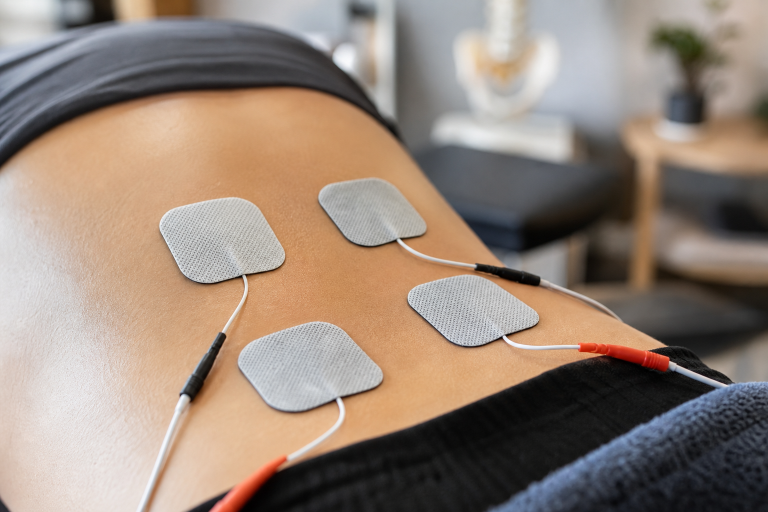
Electrical muscle stimulation uses controlled electrical impulses delivered through pads placed on the skin. Depending on the device and treatment plan, the stimulation may create a sensation in the area or encourage muscle activity. It is often discussed as a supportive modality rather than a replacement for evaluation, movement, exercise, or other appropriate care.
Research on electrical stimulation for low-back pain has produced mixed results, so realistic expectations matter. Some people may find it useful as part of a broader plan, while others may need a different approach. Suitability can depend on the source and duration of pain, current symptoms, health conditions, implanted devices, skin sensitivity, treatment goals, and other individual factors.
What Does Research Say About Chiropractic Care for Low-Back Pain?
Evidence supports a balanced view. The National Center for Complementary and Integrative Health notes that spinal manipulation is one of several nondrug approaches that may be used for acute and chronic low-back pain, and research has found small to modest average improvements in pain and function for some adults. Learn more through this overview of evidence on spinal manipulation.
Average research findings do not predict exactly how any one person will respond. The cause of pain, its duration, activity level, overall health, and willingness to follow a care plan can all affect outcomes. A thorough assessment and regular communication help patients and providers make informed decisions as care progresses.
What Can Patients Expect From a Back Pain Evaluation?
- Discussing health history, symptoms, previous injuries, medications, and the main concern.
- Identifying when pain began and which activities, positions, or movements improve or worsen it.
- Reviewing relevant movement, posture, flexibility, strength, and functional limitations.
- Creating practical goals, such as walking longer, working with less discomfort, sleeping better, or returning to exercise.
- Determining whether chiropractic care, massage therapy, movement training, passive modalities, or electrical muscle stimulation may be appropriate.
- Monitoring progress and adjusting the plan as symptoms, function, and goals change.
When Should Patients Seek Care or Urgent Medical Attention?
Persistent, recurring, or activity-limiting back pain is worth discussing with a qualified health professional. Patients may benefit from an evaluation when pain interferes with work, household responsibilities, sleep, walking, exercise, or normal movement. Owsley Chiropractic is located at 301 Pascoe Blvd in Bowling Green, KY, and lists same-day and walk-in appointments, which may be helpful for people ready to begin that conversation.
Some symptoms need urgent medical attention rather than routine chiropractic care. Seek prompt emergency evaluation after major trauma or when back pain is accompanied by progressive weakness, numbness in the groin area, fever with concerning symptoms, or new loss of bladder or bowel control.
A Practical Path Beyond Temporary Relief
Moving beyond back pain often means focusing on function as well as symptoms. Owsley Chiropractic gives Bowling Green patients a place to discuss a personalized plan that may include chiropractic care, massage therapy, movement support, passive modalities, and electrical muscle stimulation when appropriate. The aim is not to promise the same result for every patient, but to help each person take informed, practical steps toward more comfortable movement and daily life.