Why Professional Custom PCB Assembly Service Is Essential for High-Performance Electronics
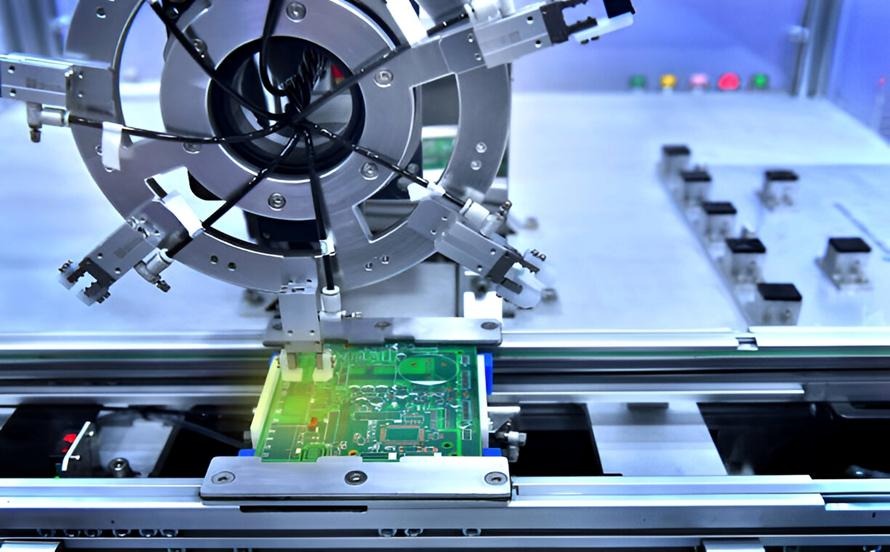
The rapid advancement of electronics has created a growing demand for products that are specifically designed to meet unique functional, mechanical, and performance requirements. Standard printed circuit boards may be suitable for mass-market products, but many industries require customized solutions that support specialized components, complex designs, and application-specific features. This has made Custom PCB Assembly an essential service for companies developing innovative electronic products.
Custom PCB assembly enables manufacturers to produce circuit boards tailored to precise design specifications, component selections, operating environments, and performance requirements. Whether developing a medical device, industrial control system, automotive module, aerospace equipment, or next-generation IoT product, customized PCB assembly ensures that every board is manufactured according to the exact needs of the application.
Because custom projects often involve complex designs, fine-pitch components, mixed assembly technologies, and strict quality standards, manufacturers increasingly rely on an experienced Custom PCB Assembly service to deliver reliable and consistent results. Professional assembly providers combine engineering expertise, advanced production equipment, and comprehensive testing to transform custom PCB designs into fully functional electronic products.
This article explains what custom PCB assembly is, how the process works, its benefits, applications, and why choosing the right assembly partner is critical for successful electronics manufacturing.
What Is Custom PCB Assembly?
Custom PCB Assembly is the process of assembling printed circuit boards according to a customer’s unique design requirements rather than using standardized manufacturing configurations. Every aspect of the assembly process is customized to match the project’s electrical, mechanical, and functional specifications.
The process may involve specialized PCB materials, multilayer board designs, high-density interconnect structures, mixed surface mount and through-hole components, custom connectors, programmable integrated circuits, conformal coating, cable assemblies, or complete electro-mechanical integration.
Unlike conventional production where identical products are manufactured repeatedly, custom PCB assembly accommodates unique product designs, engineering modifications, and specialized manufacturing requirements throughout the production cycle.
This flexibility allows companies to create highly optimized electronic products that meet demanding industry requirements while supporting future product development and innovation.
Why Custom PCB Assembly Is Important
Every electronic product has different technical requirements depending on its intended application. Factors such as operating temperature, electrical performance, physical dimensions, signal integrity, mechanical strength, and environmental conditions all influence the final PCB design.
Custom PCB Assembly ensures that these specific requirements are accurately translated into the manufacturing process. Rather than adapting a product to fit standard production capabilities, manufacturers can optimize the assembly process around the product itself.
Custom assembly is especially valuable during new product development, where engineering teams frequently update PCB layouts, component selections, and firmware before full-scale production begins. The ability to support design revisions while maintaining manufacturing quality accelerates product development and reduces costly redesigns.
By providing greater manufacturing flexibility, custom assembly helps companies develop products that deliver superior performance, improved reliability, and stronger competitive advantages.
The Custom PCB Assembly Process
The Custom PCB Assembly process begins with a comprehensive engineering review of the customer’s manufacturing documentation. Engineers examine Gerber files, bills of materials, assembly drawings, pick-and-place data, and design specifications to evaluate manufacturability before production starts.
A Design for Manufacturability review identifies potential production challenges while recommending improvements that simplify assembly, enhance reliability, and reduce manufacturing costs without affecting product performance.
Once engineering approval is complete, solder paste is applied using precision stencils before automated pick-and-place machines accurately position electronic components onto the PCB. Depending on the design, both surface mount and through-hole technologies may be used during assembly.
The assembled boards pass through carefully controlled soldering processes before undergoing inspection using automated optical inspection systems and X-ray equipment where necessary. Functional testing, programming, and electrical verification confirm that every completed assembly meets customer specifications before shipment.
Throughout production, manufacturers maintain detailed process documentation and traceability to ensure consistent quality across every production batch.
Advantages of Custom PCB Assembly
One of the greatest advantages of Custom PCB Assembly is complete design flexibility. Engineers can select the most appropriate materials, components, PCB technologies, and assembly methods without being restricted by standardized manufacturing processes.
Custom assembly also supports improved product performance because every manufacturing step is optimized according to the specific application. This often results in greater electrical reliability, better thermal management, improved signal integrity, and enhanced mechanical durability.
Another important benefit is scalability. Manufacturers can begin with prototype quantities before transitioning smoothly into low-volume or high-volume production using the same manufacturing partner.
Custom PCB assembly also simplifies supply chain management by allowing customers to consolidate engineering support, PCB fabrication, assembly, testing, and final integration within a single manufacturing facility.
These advantages contribute to shorter development cycles, improved product quality, and faster time to market for new electronic products.
Applications of Custom PCB Assembly
Custom PCB assembly supports a broad range of industries requiring specialized electronic solutions. Medical equipment manufacturers use customized assemblies for diagnostic systems, patient monitoring devices, laboratory instruments, imaging equipment, and portable healthcare products that must meet strict regulatory requirements.
Automotive manufacturers rely on custom assemblies for electric vehicle electronics, battery management systems, advanced driver assistance systems, infotainment platforms, engine control modules, and intelligent lighting systems designed for demanding operating environments.
Industrial automation companies develop custom control systems, programmable logic controllers, robotics equipment, industrial sensors, communication modules, and motor controllers that require application-specific electronic designs.
Aerospace and defense organizations utilize custom PCB assemblies for avionics, radar systems, navigation equipment, communication devices, surveillance systems, and mission-critical electronics operating under extreme environmental conditions.
Telecommunications infrastructure, renewable energy systems, consumer electronics, scientific instrumentation, Internet of Things devices, security equipment, and embedded computing platforms also depend on customized PCB assembly solutions to achieve optimal performance.
Why Choose a Professional Custom PCB Assembly Service?
Selecting an experienced Custom PCB Assembly service provides manufacturers with access to specialized engineering knowledge, advanced production technologies, and comprehensive project support throughout the manufacturing process.
Professional assembly providers work closely with customers during product development, offering Design for Manufacturability guidance, component selection assistance, PCB stack-up recommendations, and assembly optimization before production begins.
Modern manufacturing facilities utilize automated solder paste inspection, high-speed pick-and-place systems, precision reflow soldering, selective soldering, automated optical inspection, X-ray analysis, functional testing, and programming equipment to ensure consistent manufacturing quality.
Experienced service providers also manage component sourcing, inventory control, prototype production, engineering change management, and production scheduling, helping customers simplify manufacturing while reducing project complexity.
By partnering with a qualified assembly provider, companies gain access to flexible manufacturing capabilities that support both product innovation and long-term production success.
Quality Assurance in Custom PCB Assembly
Quality assurance is fundamental to every Custom PCB Assembly project because customized electronic products often operate in demanding applications where reliability is essential. Manufacturers inspect incoming materials before verifying PCB quality, component authenticity, and assembly documentation.
During production, automated inspection systems monitor solder paste deposition, component placement accuracy, solder joint quality, and assembly parameters to ensure compliance with engineering specifications.
After assembly, Automated Optical Inspection identifies defects such as missing components, solder bridges, polarity errors, and placement inaccuracies. X-ray inspection evaluates hidden solder joints beneath advanced component packages including ball grid arrays and package-on-package devices.
Electrical testing, in-circuit testing, functional verification, firmware programming, and system-level validation confirm that every completed PCB performs according to customer requirements before shipment.
Leading manufacturers maintain internationally recognized certifications such as ISO 9001, IPC-A-610, ISO 13485 for medical devices, IATF 16949 for automotive electronics, AS9100 for aerospace manufacturing, UL recognition, and RoHS compliance. These quality systems provide confidence that every custom assembly meets the highest industry standards.
Conclusion
Custom PCB Assembly has become an essential manufacturing solution for companies developing innovative electronic products that require specialized designs, advanced technologies, and application-specific performance. By tailoring every stage of the assembly process to the customer’s unique requirements, custom PCB assembly supports higher reliability, greater flexibility, and improved product performance across industries ranging from healthcare and automotive to aerospace, telecommunications, and industrial automation.
Working with a professional Custom PCB Assembly service provides access to experienced engineering teams, advanced manufacturing equipment, rigorous quality assurance, and scalable production capabilities. As electronic technologies continue to evolve and product designs become increasingly sophisticated, custom PCB assembly will remain a critical manufacturing service that enables companies to transform complex ideas into reliable, high-quality electronic products for global markets.