Top Techniques for Positive Reinforcement Dog Training

Key Takeaways
- Positive reinforcement rewards behaviors you want your dog to repeat and builds an enthusiastic attitude towards training.
- Techniques such as clicker training, luring, capturing, shaping, targeting, differential reinforcement, and the Premack Principle each offer unique benefits.
- Consistency in timing, patience, and understanding your dog’s preferred rewards make training more successful.
Table of Contents
- Clicker Training: Marking Desired Behaviors
- Luring: Guiding Your Dog into Position
- Capturing: Reinforcing Natural Behaviors
- Shaping: Building Complex Behaviors Step by Step
- Targeting: Teaching Specific Body Part Awareness
- Differential Reinforcement: Encouraging Better Choices
- Premack Principle: Using Natural Rewards
Positive reinforcement dog training is a proven, humane approach that rewards your dog for desirable behaviors. By actively encouraging wanted behaviors, you can build both your dog’s confidence and your own relationship with them. Training this way helps reduce stress and confusion, allowing your dog to enjoy learning new commands and behaviors. Whether you are new to training or want to develop more advanced skills with your dog, incorporating positive methods is essential for long-term success. If you are looking for expert support in your training journey, American Canine Academy offers valuable guidance and resources for trainers and pet parents alike.
Dogs thrive when they know what is expected of them, and a positive reinforcement system makes those expectations clear through rewards and encouragement. This kind of trainer’s natural desire to please makes lessons enjoyable for both the pet and the owner. No matter your dog’s age, breed, or temperament, choosing positive techniques will foster trust and encourage better behavior, both at home and in public.
As you read through the techniques and training tips below, keep in mind the importance of patience and consistency. Behavioral change takes time, and every dog learns at their own pace. Positive reinforcement creates an environment where learning and cooperation come naturally, making training sessions a highlight in your day.
Rewards can be anything your dog values, such as treats, play, praise, or even access to favorite activities. Understanding what motivates your individual dog will help you find the most effective way to communicate and reinforce each lesson.
Clicker Training: Marking Desired Behaviors
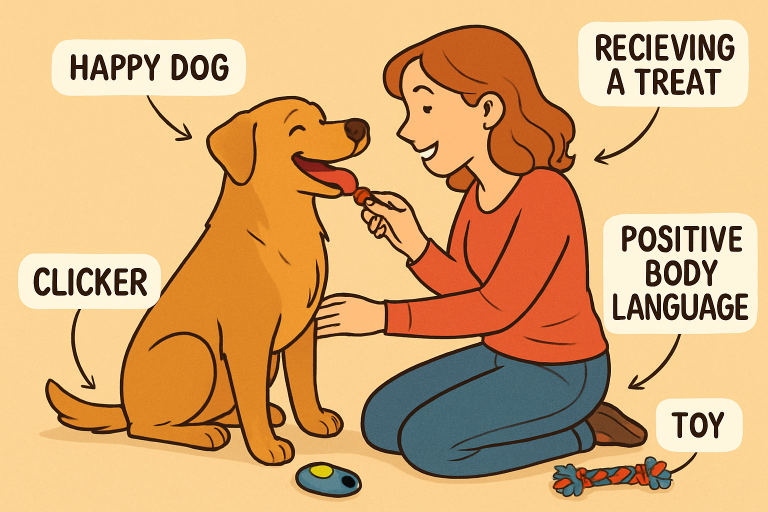
Clicker training is a straightforward method that uses a small, handheld device that produces a distinct sound to mark the precise moment your dog performs the right action. The clicker acts as an immediate signal that your dog’s behavior was correct, followed immediately by a reward. This clear communication helps make connections faster and significantly speeds up the learning process. For example, if you are teaching your dog to sit, press the clicker exactly when their hindquarters hit the ground, then give them a treat. For deeper insights into clicker training, you can visit the American Kennel Club’s guide to clicker training.
Luring: Guiding Your Dog into Position
Luring involves using a treat or toy to guide your dog into a desired position or to do a specific movement. This method is particularly useful for introducing basic commands such as ‘sit,’ ‘down,’ or ‘spin.’ Place a treat near your dog’s nose, then move it to lead them into the position you want. Once your dog reaches the correct position, properly earn the treat and praise. Over time, fade out the lure and ask for the behavior with just a verbal cue or hand signal.
Capturing: Reinforcing Natural Behaviors
Capturing requires you to observe your dog and reward them when they naturally perform a desired behavior, such as lying down quietly or sitting before a meal. When you see your dog offering the right behavior on their own, immediately mark it with a positive cue like “yes!” and provide a reward. Capturing is especially effective for reinforcing manners and helps your dog make positive choices independently. This hands-off technique can be very helpful for shy dogs or those who are sensitive to too much guidance.
Shaping: Building Complex Behaviors Step by Step
Shaping is perfect for teaching multi-step or complex behaviors by breaking them down into manageable parts. You systematically reward little increments leading up to the full behavior. For example, if training your dog to roll over, start by rewarding a head turn, then a partial roll, and gradually increase the criteria until your dog performs the full action. Shaping encourages your dog to try new things and think independently, often resulting in more confident and creative learners.
Targeting: Teaching Specific Body Part Awareness
Targeting teaches your dog specific body parts, helping your companion become better-behaved and enjoy, such as your hand or a target stick. Begin by holding your hand or the target stick close to your dog’s nose. When they touch it, immediately mark and reward the behavior. Increase the difficulty by moving the target or adding verbal cues as your dog understands the concept. Targeting is a versatile technique, useful for advanced obedience, agility, and assisting with daily routines, such as guiding your dog to their bed.
Differential Reinforcement: Encouraging Better Choices
Differential reinforcement works by rewarding better, more desirable behaviors while ignoring or redirecting less wanted actions. For example, if your dog jumps up to greet people, only offer attention or treats when they keep all four paws on the ground. By reinforcing alternative behaviors, you encourage your dog to choose more appropriate responses in various situations, helping prevent unwanted habits over time. For additional information on the psychology behind this method, see this Psychology Today article on dog training and reinforcement.
Premack Principle: Using Natural Rewards
The Premack Principle states that a more probable behavior can serve as a reward for a less probable one. In practice, this means you can use your dog’s daily joys, like walks, play time, or sniffing sessions, as motivation to perform cues or follow rules. For example, asking your dog to sit at the door before going out transforms daily routines into training opportunities. This principle encourages polite manners and reliability, especially for high-energy dogs who love to be on the move.
Incorporating positive reinforcement into your daily interactions will contribute to a better-behaved companion who enjoys training sessions. Stay consistent, patient, and always tailor rewards to your dog’s preferences for maximum success. For further reading and evidence-based advice on positive dog training, explore resources such as The Humane Society’s dog training guide.