The Power of Visual Storytelling in Digital Marketing

Key Takeaways:
- Visual storytelling enhances audience engagement and emotional connection.
- Incorporating visuals can significantly improve information retention and brand recall.
- Effective visual content strategies are essential for standing out in a crowded digital landscape.
Capturing and maintaining attention has become increasingly difficult as consumers are bombarded with digital content from all sides. In this dynamic environment, visual storytelling has emerged as one of the most powerful tools in the marketer’s arsenal. Leveraging images, videos, and well-designed graphics, brands can communicate messages faster and more effectively, leaving a lasting impression on their audiences. Companies like Karben Marketing are at the forefront of helping businesses harness this power to strengthen their brand presence and drive customer engagement in the digital world.
Modern audiences seek experiences that are both informative and emotionally engaging. Visual storytelling meets this need by making content more digestible and shareable, turning viewers into loyal followers and brand advocates. With social media flooded with striking visuals and popular branded videos, the move toward visual communication is evident. As attention spans diminish, brands must adopt creative strategies to quickly engage viewers, making visual storytelling crucial for online success. This trend represents a fundamental change in how people process and respond to information.
The Rise of Visual Content in Marketing
The prominence of visual content in marketing is demonstrated by the success of platforms like Instagram, YouTube, and TikTok, where brands communicate with audiences through compelling visuals. Research cited by Forbes shows that humans process visuals much faster than text, making it easier to capture interest and communicate ideas. With the vast majority of online interactions happening on these visually driven platforms, businesses are shifting their budgets and creative energy from text-based ads to dynamic visual campaigns.
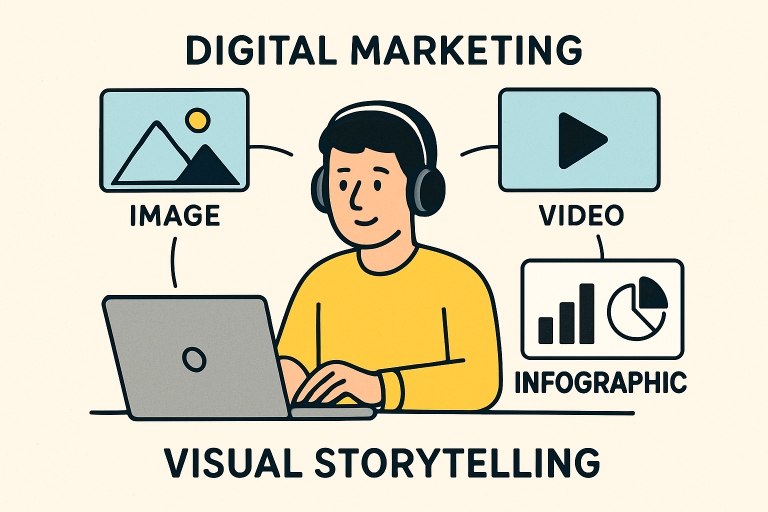
Visual content is not limited to photos and videos. Infographics, memes, motion graphics, and interactive elements enrich marketing channels and allow brands to tell more nuanced stories. These tactics enhance both bottom-line results and long-term brand awareness, as audiences are more likely to remember content presented visually than text-only content. As competition grows, employing visual storytelling is no longer optional for marketers who want to remain relevant.
Emotional Engagement Through Imagery and Video
Visual storytelling is powerful because it creates emotional experiences. People decide based on emotion, and visuals act as strong triggers. A single image can evoke nostalgia, happiness, or aspiration faster than text. Video enhances this by combining motion, sound, and imagery, inspiring action. Brands using emotional storytelling through images and videos build loyalty and become memorable parts of consumers’ lives.
Enhancing Brand Identity with Visual Storytelling
Visual storytelling goes beyond appealing graphics or professional videos; it centers on consistency and aligning with your brand’s philosophy. Every element, color, logo, typeface, and imagery must reflect your brand’s identity and mission. Visual consistency makes your brand recognizable, reinforcing your message whenever someone sees your content.
This careful approach to visual branding helps businesses stand out in a crowded marketplace. Investing in cohesive visual strategies builds trust, making it easier to communicate complex messages authentically and relatably.
Best Practices for Incorporating Visuals in Campaigns
- Know Your Audience: The demographic details, interests, and pain points of your target audience must inform your visual decisions. Younger audiences may resonate with bold colors and quick, energetic videos, while professionals might prefer polished infographics and clean layouts.
- Consistency is Key: Maintain a unified look across your website, social media, and marketing materials. A consistent color scheme, logo placement, and visual style foster professionalism and reliability.
- Tell a Story: Every visual should serve a purpose within a broader narrative. Whether you’re showcasing a behind-the-scenes photo of your team or sharing client testimonials in video form, ensure it all supports your brand’s mission and message.
- Use High-Quality Visuals: Professional images and well-edited videos elevate your brand. Grainy pictures or low-resolution content can harm your credibility.
- Incorporate Interactive Elements: Interactive content, such as clickable infographics or polls, creates a two-way engagement, keeping users active and invested in your story.
Real-World Examples of Effective Visual Storytelling
Consider a local boutique that revitalized its social media presence by shifting from static product photos to short styling videos featuring real customers. This personal touch, authentic and relatable, drove a 22% sales increase in just two months, with no increase in advertising spend. This example illustrates how placing the customer at the center of the narrative and utilizing visuals to foster authenticity can lead to rapid, tangible business growth.
Major brands, like Nike and Apple, consistently use visually driven storytelling to create inspiring campaigns that take consumers on a journey, further illustrating the impact of consistent, emotion-driven visual strategies. These brands combine visually innovative content with narrative cohesion to stay ahead of competitors and maintain their reputations as industry leaders.
Conclusion
Visual storytelling is not just a contemporary trend; it’s an essential strategy for digital marketing success. By integrating compelling visuals into every touchpoint, brands can deepen emotional connections, enhance engagement, and firmly establish their place in consumers’ minds. Investing in quality visual storytelling leads to higher recall, stronger brand advocacy, and a measurable impact on the bottom line. The future of marketing belongs to those who can create and share powerful stories, one visual at a time.