Navigating the World of Cannabinoids: A Guide to Mood-Specific Products
Introduction to Cannabinoids
We understand the challenge of finding products that truly align with your needs. That’s why we’ve put together this comprehensive guide. We will explore what Delta 8 tinctures are and how they work. We will also dig into other cannabinoids like CBD, CBN, and CBG. We aim to help you understand the different product types and how they can support specific moods and wellness goals. For those interested in understanding how particular compounds influence their emotional state, delving into Zaleaf mood cannabinoids can offer further insights. We believe in helping you make informed choices for your health. This guide will help you understand the nuances of buying safe and effective cannabinoid products online.
The human body is an intricate system, equipped with a remarkable network known as the endocannabinoid system (ECS). This complex cell-signaling system plays a crucial role in regulating a wide range of functions and processes, including sleep, mood, appetite, memory, and reproduction. Cannabinoids, whether produced by our bodies (endocannabinoids) or derived from the cannabis plant (phytocannabinoids), interact with the ECS to maintain balance and homeostasis.
These plant-derived compounds, such as Delta-8 THC, CBD, CBN, and CBG, have garnered significant interest for their potential therapeutic applications and their ability to influence overall well-being. By understanding how these cannabinoids interact with the ECS, we can begin to unlock their potential for mood improvement and general wellness. Our journey into cannabinoids starts with a primer on these key players and how they contribute to our health.
Understanding the Key Players: A Cannabinoid Primer
The cannabis plant is a treasure trove of compounds, with over 100 identified cannabinoids, each with its own unique properties and effects. To effectively navigate the vast landscape of cannabinoid products, one must understand the key distinctions among these compounds. The ECS features two main types of cannabinoid receptors: CB1 receptors, predominantly found in the brain and central nervous system, and CB2 receptors, mainly located in the immune system and peripheral organs. The interaction of cannabinoids with these receptors determines their psychoactive or non-psychoactive nature and their specific effects.
Major and Minor Cannabinoids
When discussing cannabinoids, certain names frequently emerge due to their abundance or distinct effects:
- CBD (Cannabidiol): A non-psychoactive cannabinoid known for its potential to promote relaxation, reduce anxiety, and alleviate discomfort without inducing a “high.” It primarily interacts with CB2 receptors and indirectly influences CB1 activity.
- Delta-9 THC (Tetrahydrocannabinol): The most well-known psychoactive compound in cannabis, responsible for the intoxicating effects commonly associated with marijuana. Delta-9 THC binds strongly to CB1 receptors.
- Delta-8 THC: A cannabinoid that has gained significant popularity, often described as a “milder” version of Delta-9 THC. It offers psychoactive effects, including euphoria and relaxation, but with less intensity and a lower likelihood of anxiety or paranoia. Delta-8 THC interacts with both CB1 and CB2 receptors.
- CBN (Cannabinol): A minor cannabinoid that forms as Delta-9 THC degrades. It’s often associated with sedative properties and is being explored as a potential sleep aid.
- CBG (Cannabigerol): Often referred to as the “mother of all cannabinoids” because other cannabinoids are synthesized from its acidic form (CBGA). CBG is non-psychoactive and is being studied for its potential anti-inflammatory, neuroprotective, and appetite-stimulating effects.
- CBC (Cannabichromene): Another non-psychoactive cannabinoid, CBC is thought to contribute to the entourage effect and may have potential anti-inflammatory and pain-relieving properties.
These cannabinoids, along with the plant’s terpenes and flavonoids, work synergistically through what is known as the “entourage effect.” This theory suggests that the combined effect of these compounds is greater than the sum of their individual parts, leading to improved therapeutic benefits.
Full-Spectrum, Broad-Spectrum, and Isolate
The way cannabinoids are extracted and formulated dictates the “spectrum” of the final product, influencing the range of compounds present and their potential effects:
- Full-Spectrum: These products contain all the naturally occurring compounds of the hemp plant, including various cannabinoids (such as CBD, CBN, and CBG), terpenes, and trace amounts of Delta-8 and Delta-9 THC. By law, federally compliant full-spectrum products must contain no more than 0.3% Delta-9 THC. This allows the full “entourage effect” to occur.
- Broad-Spectrum: Similar to full-spectrum, broad-spectrum products contain a wide array of cannabinoids, terpenes, and flavonoids, but with one crucial difference: all detectable Delta-9 THC has been removed. This option is ideal for individuals who want to experience the entourage effect without any THC.
- Isolate: A product containing only a single, isolated cannabinoid, such as pure CBD or Delta-8 THC isolate. All other plant materials, including other cannabinoids, terpenes, and flavonoids, have been removed. Isolates are preferred by those who want to avoid any other compounds or who require high doses of a specific cannabinoid.
A Spectrum of Choices: Types of Cannabinoid Products
The method of consuming cannabinoids significantly impacts their onset time, duration of effects, and bioavailability (the proportion of a drug or other substance that enters the circulation when it is introduced into the body and is thus able to exert an active effect). Understanding these differences is key to tailoring your cannabinoid experience to your specific needs.
Tinctures and Oils
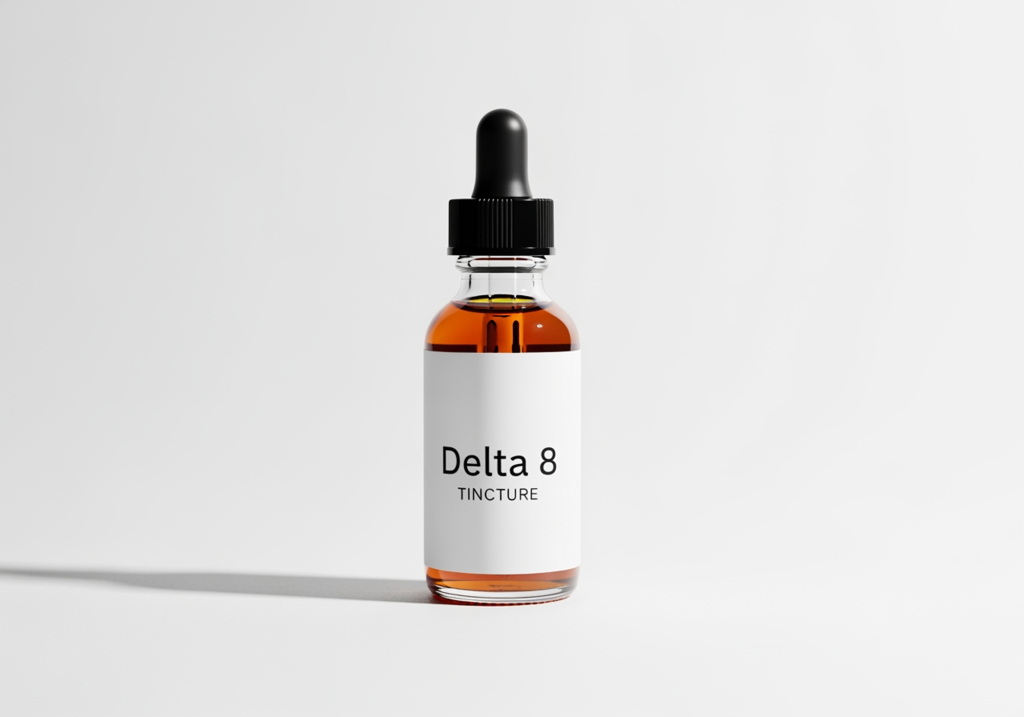
Delta-8 tinctures, along with other cannabinoid oils, are liquid extracts typically administered sublingually (under the tongue). This method allows the cannabinoids to be absorbed directly into the bloodstream through the mucous membranes in the mouth, bypassing the digestive system.
- Onset Time: When consumed sublingually, the effects of Delta 8 THC tinctures typically begin to kick in within 15 to 30 minutes. Users of Delta 8 THC tinctures have reported experiencing relief in as little as 5 minutes after consumption, making them a fast-acting option.
- Duration: Effects generally last 3-8 hours, depending on individual metabolism and dosage.
- Bioavailability: Sublingual absorption offers higher bioavailability compared to edibles, as less of the cannabinoid is lost during digestion.
- Dosing Precision: Tinctures often come with metered droppers, allowing for precise and easily adjustable dosing, which is ideal for beginners looking to “start low and go slow.” Carrier oils, such as MCT (Medium-Chain Triglyceride) oil, are commonly used to improve absorption and stability.
Edibles and Gummies
Edibles, such as gummies, chocolates, or baked goods, are consumed orally and processed through the digestive system.
- Onset Time: Due to digestion and liver metabolism, edibles have a slower onset, typically taking 45 minutes to 2 hours to produce effects.
- Duration: The effects of edibles tend to be longer-lasting, often lasting 6 to 12 hours, as cannabinoids are released gradually into the bloodstream.
- Bioavailability: Generally lower than with sublingual or inhaled methods, as a significant portion of the cannabinoid may be broken down during digestion.
Inhalables (Vapes)
Vaping involves heating cannabinoid extracts to produce a vapor that is inhaled into the lungs.
- Onset Time: Inhaled cannabinoids offer the fastest onset of effects, often within minutes, as they enter the bloodstream directly through the lungs.
- Duration: The effects are typically shorter-lived, lasting 2 to 4 hours.
- Bioavailability: Vaping provides high bioavailability, making it an efficient delivery method.
Topicals and Creams
Topical products, including balms, lotions, and creams, are applied directly to the skin.
- Onset Time: Effects are localized and can be felt within minutes to an hour.
- Duration: Effects last for several hours, providing targeted relief.
- Bioavailability: Cannabinoids applied topically generally do not enter the bloodstream in significant amounts, making them non-intoxicating and ideal for localized discomfort.
Tailoring Your Experience: Cannabinoids for Specific Moods
One of the most exciting aspects of cannabinoids is their potential to influence mood and emotional states. By understanding the unique properties of different cannabinoids and how they interact with our ECS, we can select products formulated to support specific wellness goals. Many products leverage the “entourage effect” by combining various cannabinoids and terpenes to create targeted blends.
For Relaxation and Calm
When seeking tranquility and relief from daily stressors, certain cannabinoids stand out:
- CBD (Cannabidiol): Widely celebrated for its anxiolytic (anxiety-reducing) properties, CBD can promote a sense of calm without sedation. It helps regulate mood by interacting with serotonin receptors.
- CBN (Cannabinol): While primarily known for sleep support, CBN also contributes to overall relaxation, especially when combined with other calming cannabinoids.
- Full-spectrum Delta 8 tinctures online can also offer a gentle, uplifting relaxation, as the mild psychoactive properties of Delta-8 THC are often described as calming rather than stimulating.
For Uplift and Happiness
For those moments when you need a boost in mood or a touch of mild euphoria:
- Delta-8 THC: Many users report that Delta-8 THC provides a clear-headed, uplifting high that fosters a sense of well-being and happiness without the overwhelming effects sometimes associated with Delta-9 THC. It’s often described as a “productive high.”
- CBG (Cannabigerol): Emerging research suggests CBG may have mood-enhancing properties, potentially contributing to a brighter outlook.
- Specific terpene profiles in full-spectrum Delta 8 tinctures online can also improve uplifting effects.
For Focus and Clarity
If your goal is to improve concentration and mental sharpness:
- CBG (Cannabigerol): Some users find it stimulating and helpful for maintaining alertness and focus without causing jitters.
- Low-dose Delta-8 THC: In smaller amounts, Delta-8 THC can sometimes improve focus and creativity for some individuals, offering a subtle cognitive improvement. The key here is “low-dose” to avoid any distracting psychoactive effects.
For Sleep Support
Achieving restful sleep is crucial for overall health, and certain cannabinoids can be particularly beneficial:
- CBN (Cannabinol): This cannabinoid is gaining recognition as a powerful sleep aid. Its mild sedative properties, especially when combined with CBD and other relaxing terpenes, can help promote deeper and more restorative sleep.
- Full-spectrum CBD products: The entourage effect in full-spectrum CBD, including minor cannabinoids and terpenes, can improve the overall sedative effects, making it easier to unwind before bed.
- Many Delta 8 tinctures online are also formulated with CBN to create “nighttime” blends, offering a gentle, relaxing body high that can ease you into sleep.
Safe and Smart Consumption of Cannabinoid Products
When purchasing cannabinoid products, especially Delta 8 tinctures online, consumer safety and product quality should be paramount. The market is still evolving, and vigilance is required to ensure you’re getting a safe, effective, and legally compliant product.
The Importance of Third-Party Lab Testing
The most critical factor in ensuring product quality is third-party lab testing. Reputable brands will always provide a Certificate of Analysis (COA) for their products. This document, issued by an independent laboratory, verifies:
- Potency: Confirms the exact amounts of Delta-8 THC, CBD, and other cannabinoids present, ensuring the product matches its label claims.
- Purity: Guarantees the absence of harmful contaminants.
- Contaminants: Checks for pesticides, heavy metals, residual solvents, and microbial impurities that could compromise your health.
Always look for a QR code or batch number on the product packaging that links directly to the COA. If a company doesn’t readily provide this information, it’s a significant red flag.
Understanding Legality and Sourcing
The legal landscape for Delta-8 THC and other hemp-derived cannabinoids can be complex and is subject to change.
- Federal Legality: Delta 8 THC products are federally legal in the US if they contain not more than 0.3% Delta-9 THC, as per the 2018 Farm Bill. This landmark legislation legalized hemp and its derivatives, provided they meet the Delta-9 THC threshold. For more details on the federal regulations governing hemp-derived products, refer to official sources such as the FDA’s congressional testimony on the 2018 Farm Bill.
- State Laws: Despite federal legality, Delta 8 THC is currently illegal in over 20 states across the United States. State laws vary widely: some explicitly ban Delta-8, others regulate it, and others allow it without specific restrictions. Before buying Delta-8 tinctures online, always verify their legality in your particular state or territory. A good starting point for understanding the federal framework is the USDA Farm Bill website.
- Sourcing: Opt for products derived from organically grown hemp cultivated in the USA. This ensures higher quality control and reduces the risk of contaminants from foreign sources.
Dosing: Start Low and Go Slow
Finding your optimal dose is a highly personal journey, influenced by individual body chemistry, tolerance, and the desired effects.
- Begin with a Low Dose: Especially if you are new to Delta 8 tinctures online or any cannabinoid product, start with the lowest recommended dose. For tinctures, this might be a quarter or half a dropper.
- Observe and Adjust: Wait at least an hour (or the recommended onset time for your product type) to assess the effects before considering a second dose. Gradually increase your dosage over several days or weeks until you achieve the desired outcome.
- Consult a Professional: If you have underlying health conditions or are taking other medications, consult with a healthcare professional before incorporating cannabinoids into your routine.
Frequently Asked Questions about Cannabinoid Products
What’s the difference between Delta-8 and Delta-9 THC?
Delta-8 THC and Delta-9 THC are both cannabinoids found in the cannabis plant, and they share similar chemical structures. The primary difference lies in the placement of a double bond in their molecular chain: Delta-9 has it on the ninth carbon atom, while Delta-8 has it on the eighth. This subtle structural variation leads to distinct effects. Delta-9 THC is the main psychoactive compound in marijuana, known for its potent intoxicating effects. Delta-8 THC, on the other hand, is generally considered to be about half as powerful as Delta-9. Users often describe Delta-8 as offering a milder, more clear-headed high with less anxiety and paranoia, earning it the nickname “weed light.” Both cannabinoids interact with the body’s endocannabinoid system, particularly the CB1 receptors, to produce their effects. For a deeper dive into emerging research on Delta-8 THC, scientific databases like PubMed can provide valuable insights.
Will using cannabinoid products make me fail a drug test?
Yes, there is a significant chance that using Delta-8 THC, or any product containing THC, could result in a positive drug test. Most standard drug tests are designed to detect THC metabolites, and they typically cannot distinguish between Delta-8 and Delta-9 THC. Since their chemical structures are very similar, Delta-8 metabolites can trigger a positive result for THC. If you are subject to drug testing for employment or other reasons, it is strongly advised to avoid all THC-containing products, including Delta-8 tinctures online, to prevent potential complications. THC metabolites can remain detectable in your system for several days to several weeks, depending on frequency of use, dosage, and individual metabolism.
What is the entourage effect?
The entourage effect is a synergistic phenomenon where the various compounds in the cannabis plant—cannabinoids, terpenes, and flavonoids—work together to produce a more profound and beneficial effect than any single compound alone. Instead of isolating one compound, full-spectrum products, for example, harness this synergy. Terpenes, which are aromatic compounds, not only give cannabis its distinct smell and flavor but also interact with cannabinoids to modulate their effects. For instance, certain terpenes might improve the calming properties of CBD or the uplifting impact of Delta-8 THC, leading to a more comprehensive and nuanced experience. This holistic interaction is why many consumers prefer full-spectrum or broad-spectrum products over isolates.
Conclusion
Navigating the diverse world of hemp-derived cannabinoids, from understanding Delta 8 tinctures online to exploring the nuances of CBD, CBN, and CBG, empowers us to make informed choices for our well-being. We’ve seen how different cannabinoids interact with our body’s endocannabinoid system, offering a spectrum of potential benefits for relaxation, uplift, focus, and sleep.
The key to a positive and safe experience lies in prioritizing quality, transparency, and responsible consumption. Always seek products that undergo third-party lab testing, understand the legal status in your area, and remember the golden rule: “start low and go slow” with dosing. By doing so, you can confidently explore the potential of these remarkable plant compounds to enhance your mood and overall wellness. The future of cannabinoids is bright, promising even more personalized and effective solutions for a balanced life.