How Parking Data Is Revolutionizing Urban Mobility
Key Takeaways
- Advanced parking data analytics play a central role in reducing congestion and improving urban traffic flow, resulting in both time and fuel savings for drivers.
- Real-time and predictive analytics enable better management and planning for both parking providers and users, facilitating smoother, more efficient urban journeys.
- Innovative technologies integrate parking management with broader mobility services and sustainability goals, serving as a backbone for the modern, resilient city.
Urban centers worldwide are grappling with the compounding effects of swelling populations, rapid urbanization, and an explosion in private vehicle ownership. These dynamics lead to unprecedented challenges, with rising traffic congestion and dwindling parking spaces becoming everyday hurdles. Not only do these factors disrupt daily commutes, fueling driver frustration and lost productivity, but they also hinder the smooth flow of commerce, increase stress for residents, and degrade environmental health due to prolonged vehicle idling and excess emissions. Today, advanced parking analytics tools for data-driven decision-making are rapidly transforming how cities address these issues. By leveraging both real-time and historical data, municipalities are finding smarter ways to streamline urban mobility, enhance the urban experience, and support broader sustainable development initiatives aligned with the city’s environmental commitments.
Harnessing comprehensive data enables cities to take a proactive stance. This approach not only alleviates gridlock but also promotes more responsible and efficient use of limited resources such as public space and energy. By analyzing parking behavior tracking when, where, and how often spaces are used, city planners gain critical insights. These insights empower the design of intelligent infrastructure and adaptable services that better align with residents’ and visitors’ actual needs, weekends, holidays, and local events. In increasingly dense urban environments, such a data-driven approach is pivotal for sustaining a high quality of life, supporting economic vitality, and safeguarding environmental integrity for future generations.
The Role of Real-Time Data in Parking Management
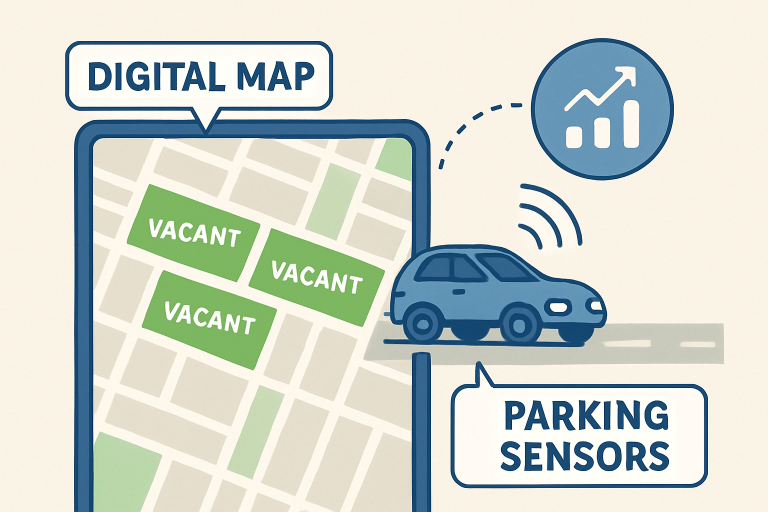
The implementation of real-time data collection technologies, such as IoT (Internet of Things) sensors embedded in pavement and sophisticated AI-powered cameras, has fundamentally changed the way city parking systems operate. These modular technologies deliver instant, hyperlocal information on parking space availability, feeding updates to digital signs, apps, and navigation systems. This enables drivers to navigate directly to open spots, reducing the amount of time spent circling and searching. For example, the city of Trikala in Greece adopted a smart parking system that guides motorists to available spaces, successfully reducing local traffic congestion by as much as 30 percent and providing a real-world example of how important timely data can be in solving entrenched urban problems.
How Real-Time Solutions Improve Everyday Commutes
Smart parking platforms, when paired with user-friendly mobile apps, have become indispensable allies for city drivers. These solutions help minimize exasperation over parking, lower the risk of missed appointments due to unpredictable delays, and foster a smoother, steadier flow of vehicles through the most congested districts. As more cities adopt real-time data solutions, they move closer to building digital-first, highly resilient infrastructure defined by adaptability and user-centric design, as highlighted in reports from the Forbes Tech Council. This new digital infrastructure underpins smart-city initiatives worldwide.
AI-Powered Predictive Analytics
Artificial intelligence is ushering in a transformative era for urban parking management. By ingesting and analyzing massive datasets of historical usage data, local event schedules, major venue calendars, and even weather forecasts, AI algorithms can accurately anticipate parking demand for specific days and times, as well as for large events. Planners equipped with these forecasts can allocate enforcement staff, optimize pricing or signage, and even create temporary digital permits, sourcing resources where and when they’re most needed. This data-driven responsiveness keeps congestion in check and lowers emissions by ensuring drivers spend less time cruising and more time at their destinations.
Dynamic Pricing Strategies
Dynamic pricing models use data-driven insights to adjust parking fees in real time, accounting for factors such as peak demand, day of the week, and even location-specific popularity. This strategy optimizes turnover rates and available spaces while discouraging driver behaviors that cause bottlenecks. By implementing variable pricing calculated from real usage data, the city reduced the time drivers spent searching for parking by 43 percent. This flexible approach both balances demand and gently encourages drivers to avoid crowded districts during peak periods, distributing traffic more equitably and reducing unnecessary vehicle emissions, key wins for cities striving for sustainability.
Integration with Mobility Services
Modern parking management no longer exists in a vacuum. Today’s most innovative apps and technology platforms interface seamlessly with public transit ticketing, e-bike dock status, and ride-hailing services, allowing users to plan fully multimodal trips without switching between separate tools. For example, Seattle’s SeaPark app integrates park-and-ride locations with city bus and light rail lines, allowing commuters to plan a mixed-mode trip that begins with parking on the city’s outskirts and ends with a low-impact train or bus ride to the urban core. By making public transport more accessible and attractive, such integrations promote eco-friendly commutes and ease urban gridlock.
Enhancing User Experience
The rapid spread of electric vehicles is introducing fresh challenges and opportunities for parking management, and advanced systems are adapting in lockstep. Innovative parking applications now incorporate real-time availability of EV charging points, permit advance reservations of both parking and charging, and offer seamless payments through a single digital interface. These features make it vastly easier for EV drivers to locate, reserve, and pay for their needs without worry or confusion. This heightened user focus supports rising adoption of cleaner vehicles and ensures that charging infrastructure is woven into the city’s broader mobility ecosystem, as Forbes details.
Addressing Accessibility and Equity
Ensuring that urban mobility systems are inclusive is critical to creating fair and resilient cities. Smart parking solutions that provide accessible spaces equipped with reliable, real-time occupancy updates dramatically increase equitable access for those with disabilities and mobility impairments. In many places, technology now simplifies the validation of disability placards or enables special notifications for accessible spots, reducing barriers for vulnerable populations. Additionally, smart pricing and reservation systems can be tailored to support low-income communities by offering discounts or ensuring affordable access to city centers. Research increasingly underscores the role that thoughtful technology adoption can play in making parking systems more transparent and just for all members of society.
The Future of Urban Parking
As urban populations continue to grow and mixed-use neighborhoods proliferate, the demand for efficient, dynamically managed parking will only increase. The accelerating integration of advanced data analytics, AI-powered tools, and dynamic pricing structures is already reshaping city landscapes, creating smarter, more adaptable, and equitable urban environments. By embracing these cutting-edge solutions, city leaders and policymakers can turn legacy parking challenges into major opportunities for innovation, economic growth, and improved urban quality of life.
Ultimately, adopting intelligent data approaches and smart parking initiatives ensures that urban centers are not only prepared for the evolving needs of the digital age but also well-positioned to deliver long-term mobility resilience, sustainability, and livability for all residents.