Best Practices for Designing Modern Audio Systems
Key Takeaways
- Understanding room acoustics is fundamental to audio system design.
- Proper speaker placement enhances sound clarity and balance.
- Integrating advanced technologies can elevate audio performance.
- Regular maintenance and calibration are essential for system longevity.
Table of Contents
- Introduction
- Understanding Room Acoustics
- Strategic Speaker Placement
- Leveraging Advanced Technologies
- Importance of System Calibration
- Incorporating User-Friendly Interfaces
- Regular Maintenance and Upgrades
- Considering Future Scalability
- Conclusion
Whether you are upgrading a home theater, building a professional studio, or equipping a commercial venue, following best practices in audio system design is essential to deliver premium sound quality. Modern audio systems should not only meet technical benchmarks but also consider the space, user experience, and flexibility for future enhancements. Working with an experienced AV Company Denver can streamline the design and installation process, ensuring exceptional results that stand the test of time.
Thoughtful audio system design begins with understanding the unique needs of each environment. This involves selecting the right equipment, accounting for room acoustics, optimizing placement, and leveraging technology to achieve clear, balanced sound throughout the listening area. At the same time, the interface should be user-friendly, and the system must remain adaptable for future requirements, whether for expanding speaker zones or introducing new features.
Understanding Room Acoustics
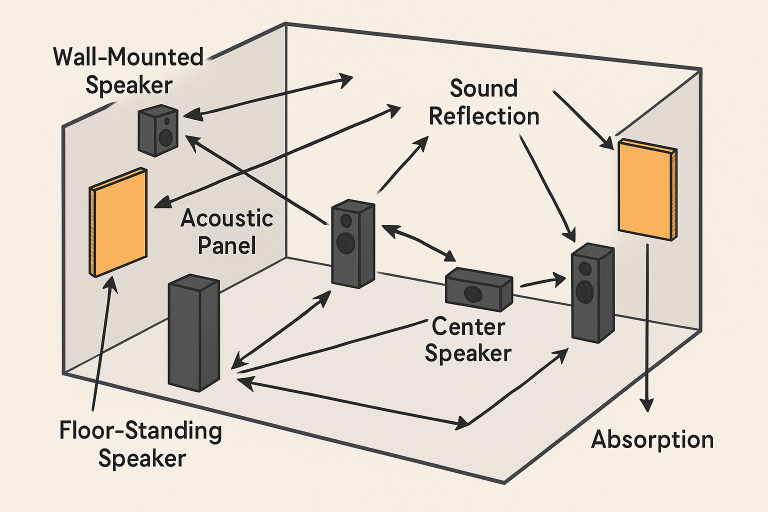
The architectural characteristics of a room play a major role in shaping the quality and personality of sound. Factors such as room dimensions, ceiling height, material surfaces, and even window placement influence how sound waves travel, bounce, and ultimately reach listeners. For example, hard surfaces like untreated walls and glass amplify reflection, which can muddy the audio and create excessive echo. Rooms with plush carpeting, thick drapes, or acoustic panels absorb more sound, reducing unwanted reverberation, but excessive absorption can make the room sound dull and lifeless.
Achieving a balance between reflection and absorption allows for vibrant, clear, and natural sound reproduction. For complex projects such as performance spaces or high-end studios, consulting with an acoustic engineer can further refine results. These steps are essential, as highlighted by research from sources such as Sound on Sound, which provides technical insight into room treatment techniques.
Strategic Speaker Placement
Speaker placement has a significant impact on both sound distribution and listener immersion. Ensuring speakers are at ear level and maintaining a consistent distance from the main seating areas improves stereo imaging and prevents localization issues. Avoiding proximity to highly reflective surfaces, such as large windows or bare walls, helps prevent disruptive echoes and maintains tonal accuracy. In larger rooms, consider adding additional speakers to avoid audio dropouts or inconsistent sound pressure levels.
Establishing symmetry in placement, particularly with the main left, center, and right channels, is especially important in home theaters or studio settings. Subwoofers also benefit from placement experimentation, as different spots can greatly affect bass clarity and impact due to room standing waves.
Leveraging Advanced Technologies
Utilizing modern technologies is one of the most effective methods to optimize audio performance and simplify system management. Audio-over-IP protocols, such as Dante or AVB, enable flexible, scalable audio distribution over standard Ethernet networks rather than traditional analog cables. This not only minimizes wiring complexity but also makes it easier to integrate the audio system with video controls, automation, and future enhancements.
Intelligent digital signal processors (DSPs) further refine sound by managing EQ, time alignment, and automatic room correction. Wireless streaming devices and smart control options via home automation platforms are increasingly sought after, creating opportunities for seamless integration.
Importance of System Calibration
Professional calibration is vital to realize the full potential of a modern audio system. Calibration consists of balancing speaker output levels, setting crossover frequencies, adjusting time delays, and applying equalization to account for room acoustics. Regular recalibration helps address changes caused by new furniture, equipment upgrades, or even seasonal shifts in temperature and humidity that might affect the room’s response. Proper calibration can remedy issues such as boominess, muddiness, or lack of clarity, providing the most accurate representation of the recorded material.
Incorporating User-Friendly Interfaces
An audio system that is difficult to operate can turn even the best equipment into a source of frustration. Investing in touch panels, intuitive smartphone apps, and simple remote controls empowers users to manage sound settings quickly and confidently. Clear on-screen guides, logical menus, and preset scenes can further simplify everyday use, enabling users to switch between movie, music, or conference modes without fuss. In commercial environments such as stores or event venues, providing training or support documentation ensures staff can fully leverage the system’s unique strengths.
Regular Maintenance and Upgrades
Routine checks and updates are essential for keeping any audio system performing at its peak. Inspecting connections, cleaning contacts, updating firmware, and replacing worn components extend the system’s life and head off issues before they become costly problems. Keeping up with new technology is just as crucial for meeting rising expectations regarding sound quality and system features. Upgrading amplifiers, adding wireless capabilities, or adopting higher-resolution streaming formats can keep your setup fresh and competitive for years.
Considering Future Scalability
Audio system designs should not be limited solely to immediate needs. Future-proofing with modular components, expandable interfaces, and flexible cable paths makes it easy to add more zones, speakers, or functions later without extensive redesigns. This approach saves both time and money, especially when business demands or personal preferences grow. Scalability planning also ensures your system is ready for integration with developing audio, video, or automation innovations.
Conclusion
Modern audio systems are a blend of science, art, and user experience. By prioritizing room acoustics, meticulous component selection, advanced technologies, and ease of use, you guarantee a superior listening environment. With regular care and a vision for the future, your system will continue to provide reliable, top-tier audio enjoyment for years to come.