Hydraulic Hose Selection and Inspection in Lufkin, Texas
Table of Contents
- Why Hose Selection Matters
- Key Selection Factors
- Pressure, Temperature, and Fluid Compatibility
- Routing and Installation Basics
- Hydraulic Hose Inspection Checklist
- Signs a Hose Needs Replacement
- Safe Leak Checking
- Building a Maintenance Plan
- Common Questions
Hydraulic hoses keep fluid moving between pumps, valves, cylinders, and other components that power working equipment. An undersized hose assembly may operate through humid summers, heavy rain, muddy ground, dusty work areas, and frequent vibration. Those conditions can make hose selection, routing, and inspection important parts of everyday equipment care.
Whether a machine is used for property maintenance, hauling, construction, forestry, or industrial work, a properly specified hydraulic hose assembly must suit the full application. Matching only the visible size of an old hose can overlook pressure demands, fluid compatibility, movement, fitting requirements, and exposure to heat or abrasion.
Why Hose Selection Matters
Hoses provide flexible connections in a hydraulic system, but they are not interchangeable. An undersized, poorly routed, or incompatible hose can restrict flow, wear out early, leak, or fail in operation, posing a serious concern in demanding applications such as Saltwater disposal services. Choosing the hose for the actual operating environment supports safer work and helps prevent unplanned equipment downtime.
A useful starting point is to document what the hose carries, the maximum operating pressure, the temperature range, and how the equipment moves. These details help maintenance teams make selection decisions and conduct regular inspections based on application demands rather than appearance alone.
Equipment that handles fluids in demanding field or industrial settings may also require attention to drainage, containment, and operating practices.
Key Selection Factors for a Replacement Hose
Before replacing a hydraulic hose, review the entire assembly and its operating conditions. Important factors include:
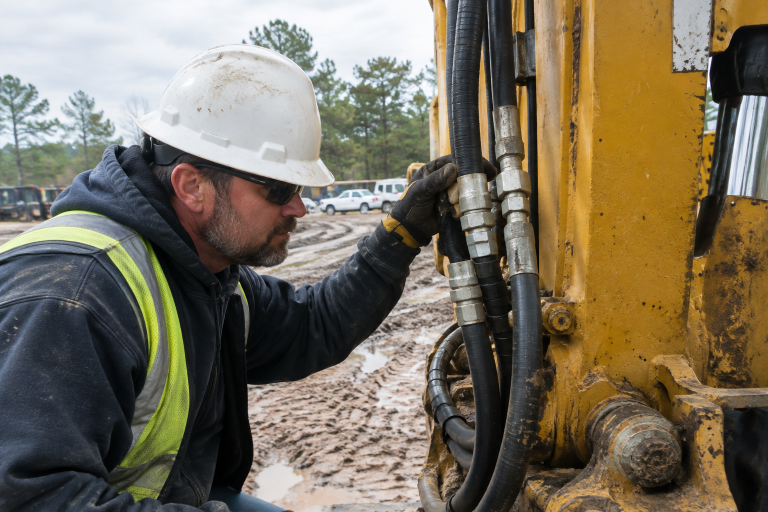
- System pressure: The hose must be rated for the system’s maximum working pressure.
- Operating temperature: Consider both fluid temperature and surrounding heat.
- Fluid type: The hose tube material must be compatible with the hydraulic fluid.
- Inside diameter: An incorrect diameter can affect flow and system performance.
- Length and movement: The hose needs enough length for normal travel without excess looping.
- Bend requirements: A hose should not be forced tighter than its specified minimum bend radius.
- Fittings and connections: End connections must match the equipment and align naturally.
- Exposure: Abrasion, weather, chemicals, heat, and vibration all influence hose life.
Pressure, Temperature, and Fluid Compatibility
Working pressure and burst pressure are different ratings. Working pressure is the maximum pressure a hose is intended to handle under normal service conditions. Burst pressure describes the point at which failure may occur under test conditions, not a safe operating target. The hose’s working pressure rating should meet or exceed the highest pressure expected in the system.
Pressure spikes and repeated impulse cycles can be especially hard on hose assemblies. Heat also matters because it can affect flexibility and performance. In Lufkin’s summer conditions, hoses near engines, exhaust components, or other heat sources deserve close attention. Always verify the hose manufacturer’s specifications for temperature limits and fluid compatibility. Using an unsuitable inner tube can cause swelling, softening, brittleness, or deterioration.
Routing and Installation Basics
Correct routing helps a hose survive normal machine movement. Avoid sharp bends, kinks, twisting, and contact with moving parts. Keep hoses clear of hot surfaces, rough frame members, and sharp edges. Use clamps, sleeves, guards, or spacing adjustments where contact is possible, but do not clamp a hose so tightly that it cannot move as intended.
Fittings should line up without forcing the hose into position. A hose that appears acceptable when equipment is parked may rub against a guard or frame only when a boom, cylinder, or attachment cycles. Leave room for movement, while avoiding large loops that can snag or vibrate against nearby components.
Hydraulic Hose Inspection Checklist
- Shut down equipment according to the manufacturer’s procedure.
- Relieve stored hydraulic pressure before touching the system.
- Look for wet spots, drips, or fluid accumulation.
- Check the outer cover for cuts, cracks, scuffs, and exposed reinforcement.
- Inspect for blisters, swelling, flattening, hard spots, or unusual softness.
- Examine fittings, crimps, adapters, and seals for damage or seepage.
- Look for twisting, kinking, poor support, and contact points.
- During a controlled operational check, observe hose movement and listen for unusual sounds.
- Record the hose location and any condition that needs attention.
Warning Signs That Call for Replacement
A hose should not remain in service simply because it has not failed yet. Replace or fully evaluate an assembly when there is visible wire reinforcement, deep abrasion, cracked cover material, blistering, permanent flattening, damaged couplings, seepage at a fitting, repeated pressure loss, or evidence of heat and chemical damage.
For example, a hose that brushes against a metal edge during every machine cycle may initially show only a light scuff. Continued movement can wear through the cover and eventually expose reinforcement. Reports of hydraulic hose damage caused by rubbing against surrounding surfaces reinforce the value of clearance, protective sleeves, and early correction of contact points.
How to Check for Leaks Safely
Never search for a pressurized hydraulic leak with bare hands. Escaping fluid can penetrate skin and requires immediate medical attention. Shut down and depressurize the system before close inspection. When a controlled check is necessary, use an appropriate safe barrier, such as cardboard, rather than a hand to locate a suspected leak. Follow applicable lockout procedures and wear suitable personal protective equipment.
Building a Practical Maintenance Plan
Routine hose care is easier when it is part of a written maintenance plan. Set inspection intervals based on usage, operating pressure, machine criticality, movement, and exposure to mud, moisture, heat, vibration, or abrasive materials. Keep records of hose locations, installation dates, inspection findings, and replacement dates. Operators should report visible damage, leaks, pressure changes, and unusual sounds promptly.
When the same hose fails repeatedly, look beyond the replacement itself. Adjust routing, add a guard or sleeve, improve clamping, change spacing, or investigate misalignment and vibration. Correcting the root cause is more dependable than repeatedly installing another hose in the same damaging position.
Common Questions About Hydraulic Hoses
How Often Should Hydraulic Hoses Be Inspected?
Inspection frequency depends on equipment use, pressure, temperature, movement, the working environment, and manufacturer guidance. Equipment in high-movement, high-heat, or abrasive service generally requires more frequent inspections than equipment used only occasionally in protected conditions.
Can a Damaged Hydraulic Hose Be Repaired?
Visible hose damage usually calls for replacement of the assembly rather than a temporary patch. Connection or seal problems may have a different remedy, but the entire hose, fittings, routing, and system conditions should be evaluated before the equipment returns to service.
Why Do Hoses Leak Near Fittings?
Leaks near fittings can result from misalignment, excessive bending near the connection, damaged seals, incorrect assembly, loose connections, or pressure beyond the component’s rating. Tightening a fitting without identifying the cause may not solve the underlying issue.
Final Takeaway
Reliable hydraulic hose service begins with the right match of pressure rating, temperature range, fluid compatibility, hose diameter, fittings, movement, and environment. In Lufkin, careful routing and regular inspection can help identify wear before it becomes a leak, a shutdown, or a safety event. Clear records, practical checks, and timely replacement decisions make hose maintenance more manageable over the life of the equipment.