Why You Should Never Give a Recorded Statement to the Insurance Adjuster After a Bike Wreck
Key Takeaways
- A recorded statement is not the same as reporting a crash.
- You may not know the full facts, injuries, or financial impact immediately after a wreck.
- Adjusters can ask questions that invite guesses, assumptions, or harmful wording.
- Preserving photos, medical records, witness information, and damaged gear is often more valuable than rushing into a phone interview.
- Your own policy may require notice and cooperation, so review its terms rather than simply refusing every request.
A motorcycle wreck can turn an ordinary ride through Rockford, from busy stretches near East State Street to the quieter roads outside the city, into a confusing and painful ordeal. In the days that follow, an insurance adjuster may sound helpful, calm, and urgent. They may ask for a recorded statement “just to get the facts.” Before agreeing, understand why people involved in serious motorcycle crashes often seek guidance from Tuite Law before giving a formal account of what happened.
The central concern is not that you should hide facts or ignore your insurance obligations. It is that a recorded statement can lock you into incomplete, imprecise, or misunderstood answers before you know the full extent of your injuries, the available evidence, or the details of the crash. A careful approach protects both your health and your ability to provide an accurate account later.
Table of Contents
- A Crash Report Is Different From a Recorded Statement
- Why Timing Matters After a Rockford Motorcycle Wreck
- Questions That Can Create Problems
- Protect Evidence Before It Disappears
- Do Not Minimize Injuries
- A Safer Way to Respond to an Adjuster
- Final Checklist
A Crash Report Is Different From a Recorded Statement
After a collision, you should promptly report the crash to the appropriate authorities and notify the relevant insurer. Those basic steps are different from agreeing to a recorded interview. A report generally communicates essential information such as the date, location, vehicles involved, and claim number. A recorded statement can go much further, inviting detailed questions about speed, visibility, conversations, prior injuries, lane position, medical symptoms, and fault.
Illinois riders share roads with heavy commuter traffic, commercial vehicles, changing weather, and road construction. The Illinois crash-data resources reflect why agencies use crash information to study roadway safety, but an injured rider should not feel pressured to reconstruct every second of an incident from memory while still shaken.
Why Timing Matters After a Rockford Motorcycle Wreck
The first account you give may be incomplete. Adrenaline, pain medication, shock, and lack of sleep can affect memory and communication. You may not yet have seen the police report, spoken with witnesses, obtained video, or learned whether a nearby business camera captured an intersection, a lane change, or the moments before impact.
Injuries can also develop over time. A rider who initially believes they have only bruises may later receive treatment for a fracture, concussion, soft-tissue injury, or nerve symptoms. Saying “I am fine” or “it is just soreness” during a recorded call can be misleading, even if it was honestly believed at the time.
Questions That Can Create Problems
An adjuster may ask reasonable questions, but the wording and pace can encourage answers that are too broad or speculative. A casual conversation can become a permanent record that is later reviewed alongside medical records, photographs, and other evidence.
Be especially cautious with questions about:
- Estimated speed, distance, or reaction time.
- Whether you “saw the vehicle coming.”
- Whether you could have avoided the collision.
- Any prior pain, injury, medical treatment, or similar crash.
- Whether you were wearing safety gear or using a phone.
- Whether you believe another person was fully or partly at fault.
There is a major difference between saying you do not know and guessing. If you do not know an answer, it is better to say so than to fill silence with an estimate. Do not argue, exaggerate, or adopt the adjuster’s description of events simply because it sounds close enough.
Protect Evidence Before It Disappears
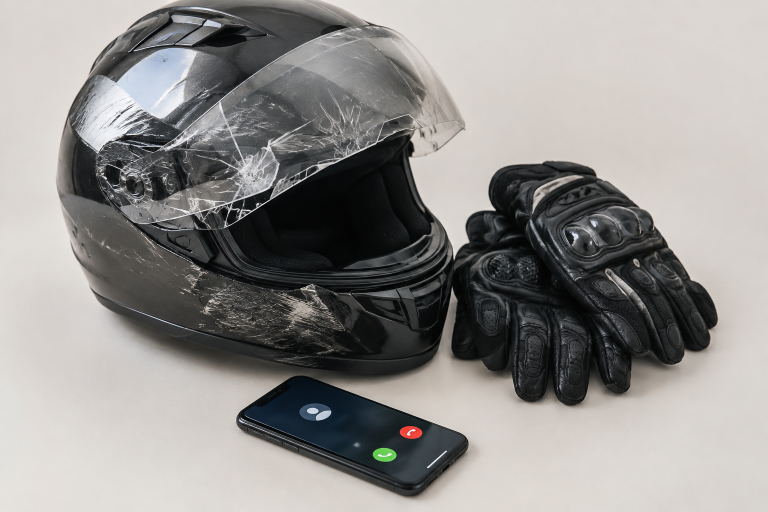
Evidence can clarify events more reliably than a stressed rider’s immediate recollection. Save photographs of the motorcycle, helmet, jacket, gloves, boots, injuries, debris, roadway markings, weather conditions, and vehicle damage. Keep the damaged gear and avoid repairing or discarding the motorcycle until its condition has been thoroughly documented.
Get names and contact details for witnesses when possible. Make a written note of nearby homes, stores, intersections, or parking areas that may have cameras. Video systems sometimes overwrite footage quickly, so identifying potential recordings early can be important. Keep copies of tow receipts, repair estimates, medical bills, prescription receipts, missed-work records, emails, and messages about the crash.
Do Not Minimize Injuries
Medical care should come before insurance strategy. Seek emergency help after a serious collision and follow up with a qualified medical professional if pain, headaches, dizziness, numbness, limited movement, sleep problems, or emotional distress appear or worsen. The motorcycle safety guidance from NHTSA emphasizes that motorcyclists face particular risks on the road and that protective equipment, including a compliant helmet, remains important.
Be accurate with healthcare providers. Explain what happened, describe symptoms honestly, attend recommended follow-up appointments, and keep records. A treatment journal can help you remember changes in pain, mobility, sleep, work limitations, and daily activities without forcing you to rely on memory months later.
A Safer Way to Respond to an Adjuster
You can remain professional without giving a recorded statement on demand. Obtain the caller’s name, company, phone number, email address, claim number, and the purpose of the request. Tell the adjuster you are not prepared to provide a recorded statement at that time and ask that questions or document requests be sent in writing.
If the request comes from your own insurer, review your policy carefully, as it may include reporting and cooperation requirements. Provide truthful basic information as required, but do not sign broad medical releases, accept a quick settlement, or agree to recorded questioning without understanding what you are being asked to do. A settlement release may end your ability to pursue additional payment related to the crash.
Final Checklist
- Put safety and medical care first.
- Report the crash and keep the claim information.
- Do not guess about fault, speed, injuries, or what another driver saw.
- Preserve the motorcycle, protective gear, photos, records, and witness details.
- Ask adjusters to communicate in writing when possible.
- Read every authorization, release, and settlement document before signing.
Conclusion
After a Rockford bike wreck, the safest immediate choice is usually to avoid a recorded statement until you can give an informed and accurate account. Take time to heal, collect reliable information, and understand your responsibilities before allowing a stressful phone call to define the story of the crash.